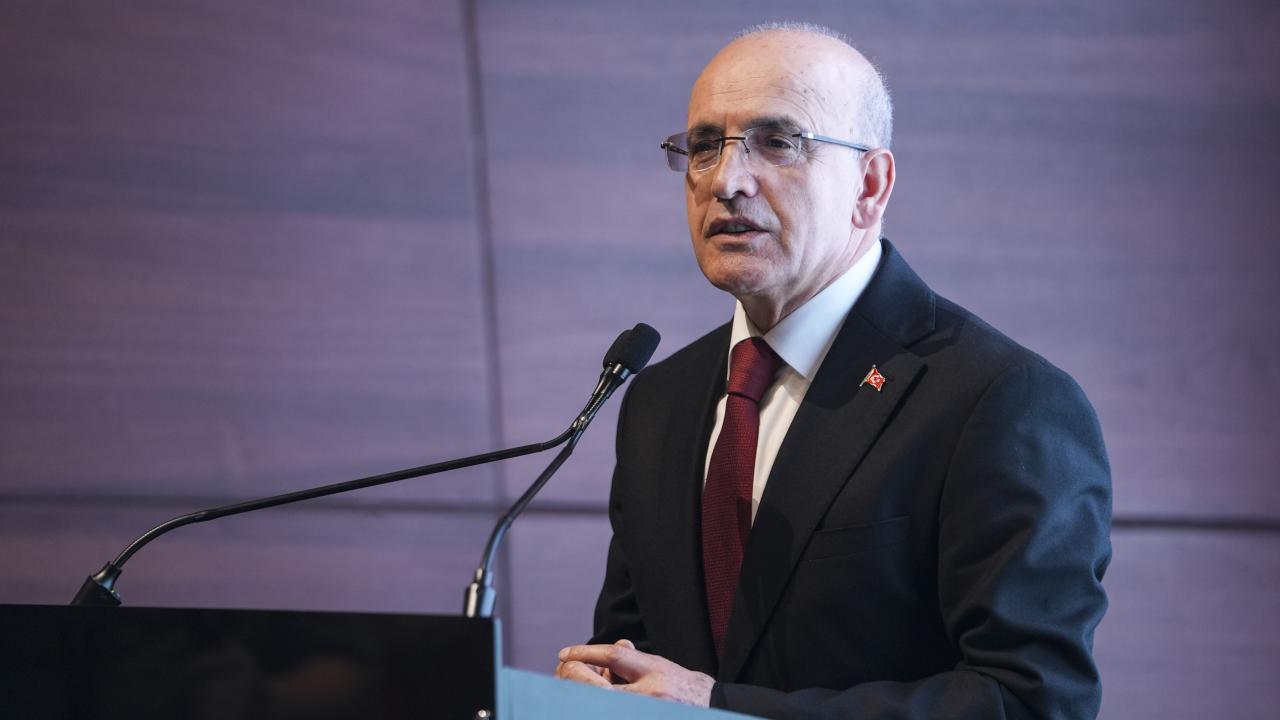
Finance and Finance Minister Mehmet Şimşek said the war was a “big shock” in his speech at the opening of the International Economic Summit (UEZ 2026) in Sapanca.
Şimşek emphasized that the impact of today's war on energy markets is really large compared to the past: “Because the Strait of Hormuz is a critical transit point. Not only in terms of oil, but also in terms of fertilizers and natural gas. Therefore, we are aware of the magnitude of this shock.” he said.
Minister Şimşek pointed out that the increase in oil prices was quite high compared to similar wars or shocks in the past: “There is a fragile ceasefire. I hope that this ceasefire lasts. The markets are currently reflecting this fragility to some extent. Unfortunately, even if the ceasefire continues, there will be some damage to the global economy and Turkey.” gave his assessment.
Şimşek also touched on developments in the global economy and said:
“The destruction caused by the war and its recovery will take time. Even if today's ceasefire continues, its impact will be felt. Geopolitically, neither the region nor the world will be the same as before. We are in a time of great disruption. Trade wars and their attendant fragmentation, demographic change, climate crisis, the transformative and destructive effects of artificial intelligence and automation… In fact, we are living through a difficult time in many respects.”
“We believe that Türkiye is resilient”
The Italian philosopher Antonio Gramsci said: “The old world is dying, the new world is in birth pangs, now is the time of monsters.” Şimşek remembered his words and said that the wars actually reflected the era of monsters.
Şimşek drew attention to the impact of the war and said:
“Wars have much more lasting and greater consequences than other shocks. We believe that Türkiye is resilient. We proved that last year and we will prove it again this year. If you remember, we faced important shocks in 2025. The program has been tried and tested, it has proven itself, it has strengthened Turkey's macroeconomic fundamentals, increased its resilience and enabled us to deal with shocks. That is the main problem. Who is more vulnerable to shocks, who is more at risk? In addition, the impact of conflicts in the Middle East on Turkey, especially through the energy and natural gas channel, remains relatively low due to limited connectivity. In this context, according to the Economist, Turkey is one of the countries that can demonstrate greater resilience to current geopolitical shocks.
“Financial policy is more robust today than it used to be.”
Emphasizing that Türkiye's energy dependence on the Middle East, especially from suppliers using the Strait of Hormuz, is almost non-existent, Şimşek said that there is some import of natural gas from Iran, but it has not been affected so far as it is done through pipelines. Pointing out that there is almost no dependence on oil, Şimşek said: “This is important. Because if the ceasefire does not last and this war continues, there will be a problem with energy supply security in many countries, this concerns not only natural gas and oil, but also all its derivatives. Türkiye will have an advantage there. Because as I said, Turkey is much less dependent on this region.” he said.
Şimşek drew attention to the resilience of the Turkish economy and said:
“The most important area and the main source of our resilience is that fiscal policy today has a stronger structure compared to the past. We experienced a major earthquake in 2023, and there were some other problems like the year of 2020. Nevertheless, we have reduced the budget deficit to national income to below 3 percent. Our budget deficit and the debt-to-national income ratio are low. This gives us room for maneuver in policy and allows us to respond more strongly to shocks. Deficit is relatively “last “Year, the average ratio of budget deficit to national income in developing countries was 6.3 percent, more than twice as much as in Turkey.” Here too, our resilience to macroeconomic shocks is higher. The sensitivity of the ratio of government debt to national income to simultaneous shocks in real exchange rates, interest rates and growth has decreased significantly compared to previous periods.”
“We are at a very comfortable point in terms of reserve adequacy.”
Emphasizing that the balance of payments deficit remains a critical area of fragility, Şimşek stated that the increase in oil prices will be directly reflected in the current account deficit. Stating that the war will affect the economy not only through energy but also trade and tourism, Şimşek stated that the main risk for energy importers and countries close to the region such as Turkey is the deterioration of the current account balance.
Şimşek said: “The deficit will increase slightly. But despite the increase in the deficit, our gross external financing needs will be lower than in the past. This is of course a fragility, but we see it as manageable.” he said.
Stating that Türkiye's total debt is low compared to previous shocks, Şimşek emphasized that they could overcome this shock with minimal damage and position Türkiye strongly again.
Emphasizing that they had built up a significant buffer at the beginning of the shock, especially in the area of international reserves, Şimşek said: “With this war, risk appetite decreased and there was a certain outflow of capital from Turkey. Now with the ceasefire, this is coming back. Our citizens' demand for foreign currencies remained quite limited, thanks to the confidence in our program. I can easily say that we are at a very comfortable point in terms of reserve adequacy.” gave his assessment.
Details follow…
Bir yanıt yazın