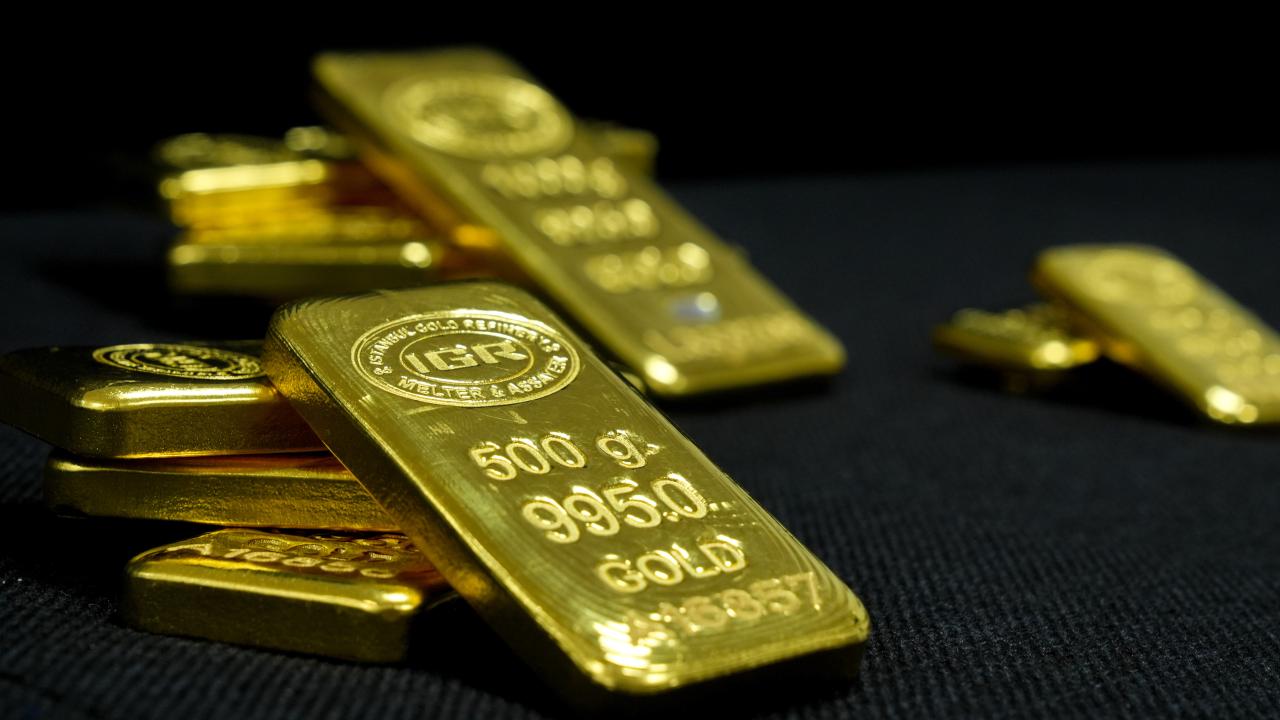
While February was marked by geopolitical developments, developments in US trade policy and ongoing overvaluation concerns for technology and AI companies, gold's rise continued.
The escalation of tensions between the US and Iran increased the risk perception in the markets. Gold prices rose as investors turned to safe havens amid rising geopolitical tensions.
Geopolitical developments, especially those coming from the USA and Iran, are crucial for the development of the gold price. It also underscores predictions that demand for safe havens could increase if the impact of U.S. financial, trade and foreign policy continues.
Following the slowdown in inflation in the US, the fall in US 10-year bond yields also supported gold prices.
The end of the Lunar New Year holiday in China supported gold prices
The end of Chinese New Year and ongoing uncertainty over US trade policy also had a positive impact on the rise in gold prices.
After the US Supreme Court ruled that President Donald Trump's “emergency tariffs” were unlawful, demand for safe havens increased as the dollar weakened.
The weakening of the dollar due to increased risk appetite following the Nvidia balance sheet also increased demand for gold. Nvidia's revenue reached $68.1 billion, up 73 percent on an annual basis in the three-month period, beating market expectations. Nvidia's net profit rose 94 percent annually in the quarter in question, reaching $42.96 billion. The company's net income was $22.1 billion in the same period last year.
The ongoing demand for gold from central banks is also supporting the price of gold.
With these developments, gold ounces, which stood at $5,000,280 at the end of February, rose 8.9 percent over the period, making investors profitable for seven consecutive months for the first time in 53 years.
An ounce of gold earned 12.4 percent in January, 2.2 percent in December, 5.4 percent in November, 3.7 percent in October, 11.9 percent in September and 4.8 percent in August.
“The upward momentum of the gold price is fading”
Daniela Corsini, senior commodity economist at Italy-based banking group Intesa Sanpaolo, said in her assessment: “In my opinion, the upward momentum in gold prices is fading, but so far prices are well supported by various factors.” he said.
Corsini explained that central banks are still buying gold, but these purchases are not happening as quickly as the record highs in 2022, 2023 and 2024, saying: “Retail investors continue to buy gold with concerns about missing the opportunity for an upside, but the rise in gold is also due to the demand for a safe haven due to increasing trade uncertainty, political and geopolitical risks and the expectation of the Fed to cut interest rates.” gave his assessment.
Corsini explained that a more transparent source of demand has emerged for gold, highlighting that issuers of US dollar-backed stablecoins have become major buyers of reserve assets such as US Treasuries and gold.
Kelvin Wong, senior market analyst at Oanda, a data services provider in New York, said: “From a cross-market analysis perspective, the decline in the US 10-year bond yield reduces the opportunity cost of gold, an interest-free asset, and in this case supports gold's ongoing recovery.” he said.
Bir yanıt yazın