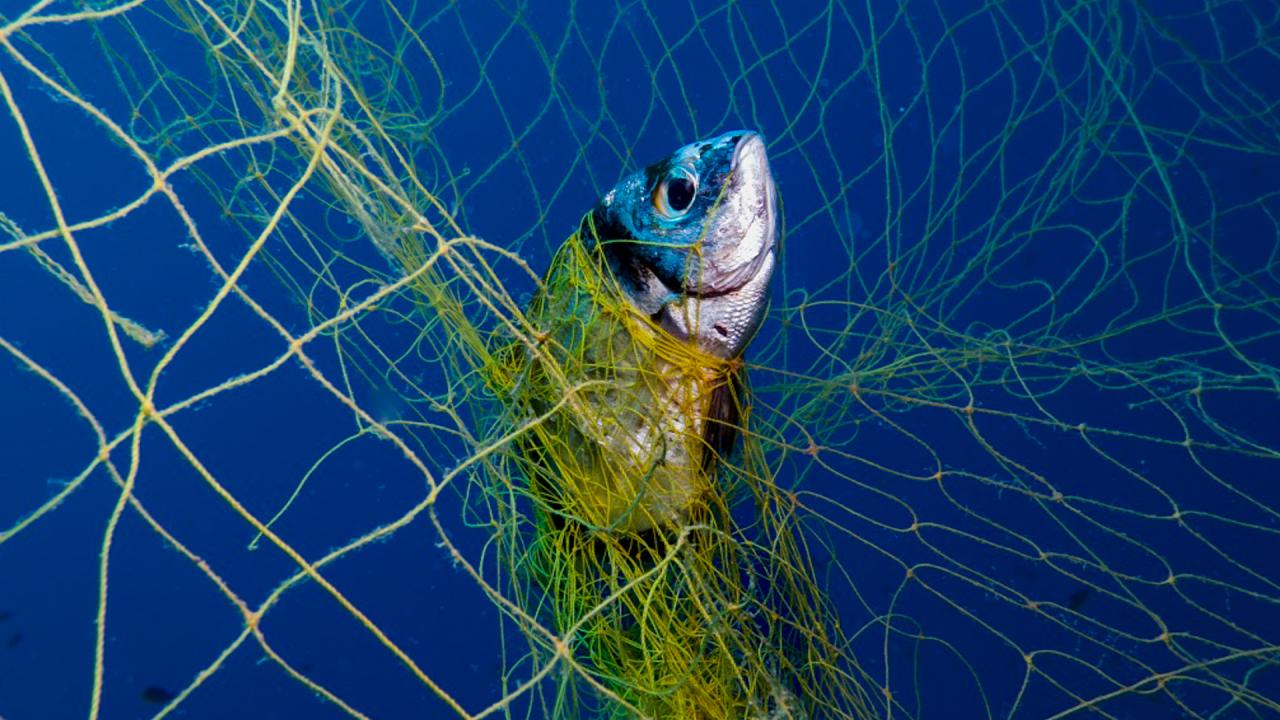
Fishing is a profession as old as humanity. In order to achieve this over a large area, nets made of plastic are usually used. Sometimes these nets end up in the oceans and seas due to their actual lifespan, sometimes due to losses, and sometimes due to accidents. However, these networks are a disaster for the environment.
These abandoned nets, so-called “ghost nets”, enable underwater fishing to continue independently. Even during the breeding season, fish often get caught in these nets and are damaged.
In addition to creatures such as dolphins, turtles, stingrays and sharks, seabirds also die when they get caught in these nets. Furthermore, deaths occur over a long period of time and are painful.
Microplastics are returning to humans
Ghost nets that harm life on the seafloor and drown coral reefs will continue to pollute water and harm living creatures for hundreds of years. When dissolved in water, it releases microplastics that enter the human body via fish. There is a risk of causing diseases such as cancer. Collecting ghost nets from the sea also causes a loss of resources and time. Türkiye has cleaned 2.9 million square meters of ghost nets in the last 11 years.
The solution came from university students
Studies continue to be conducted around the world to find a solution to this problem. However, in Turkey the solution came from a group of young university students. The team “Pagit Spectrum: DEEPNETS”, consisting of students from Manisa Celal Bayar University, won first place in the “Environment and Energy” category of the research project competition within the framework of TEKNOFEST TRNC 2025 with its project “Dissolvable Networks”.
The team that continues its work with the encouragement of its success includes Electrical and Electronic Engineering students Hakan Çevik, Umut Günay and Barış Can Gökçe, Bioengineering students Beril İralgil and İrem Akalan and Computer Engineering student Özge Göksu.
The academic advisor of the project is lecturer Mehmet Nuri Öğüt from the Project Coordination and Research Center of Manisa Celal Bayar University. TÜBİTAK also supports the study.
Mechanical performance optimization is carried out
The work did not end with a reward. New optimization studies on the durability, controlled dissolution time and mechanical performance of the nets in the marine environment are currently being carried out at the university.
Pilot implementation meetings with fishery cooperatives are planned to verify the data obtained in the laboratory environment under marine exploitation conditions. This provides a more comprehensive analysis of both the environmental impact and the performance of the product.
When is it used?
The study is based on water-soluble structures based on “biopolymers”. Since it is not oil-based, the material must also be durable, as it should dissolve if lost or left in the sea and not harm nature or marine life. For this reason, the focus of the study was on longevity, an economical and sustainable system.
The aim is to make it available to the end user within a few years of the completion of the ongoing patent process.
The ghost problem could end after the 2030s
Pafit Spectrum: DEEPNETS, scientific research team. So they won't produce the network. All companies that seek mass production after a patent can produce as long as they receive patent rights. This will quickly pave the way for change in the fishing industry.
The team's dream, which began with environmental awareness, is “a blue homeland, free of ghost network problems” from the 2030s. The completion of the study will bring significant benefits not only to Türkiye but to waters around the world.
Bir yanıt yazın