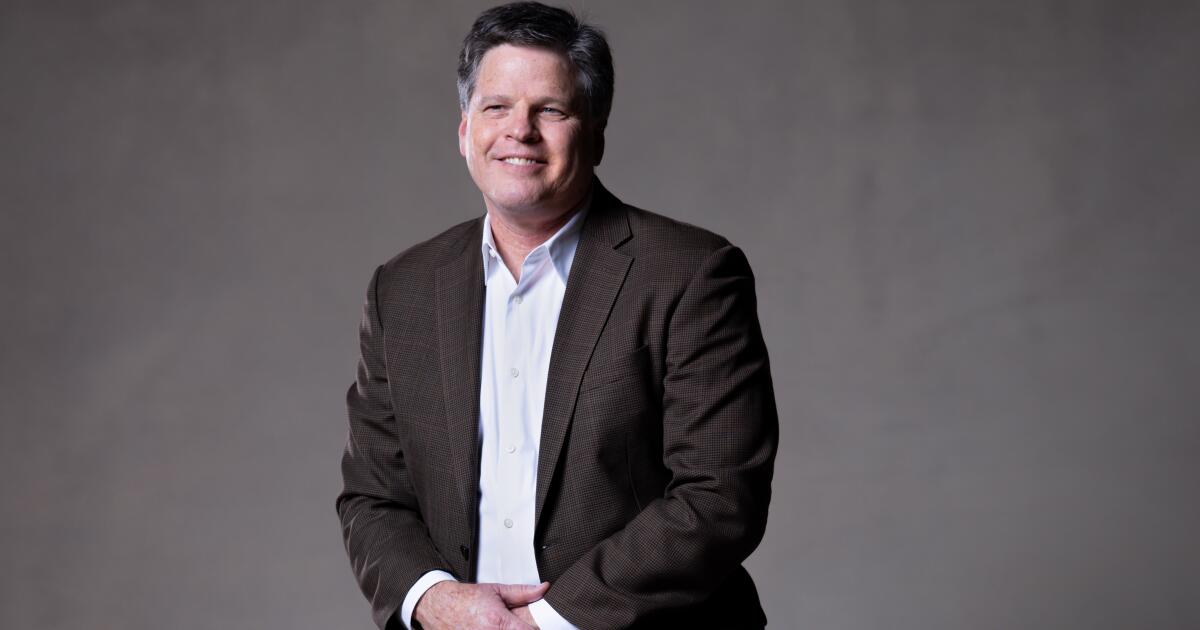
Michael Flood, photographed at the Los Angeles Times in El Segundo in September. 8.
About a month after COVID-19 locked down most of the state in the spring of 2020, Debbie Deck, who runs a neighborhood food bank, decided to stay open when so many had closed. But most of her volunteers had gone home, and the pantry quickly ran out of food.
At the same time, demand at their food pantry had more than quintupled – from 2,500 people per month to 14,000. Families from as far away as Ventura and South Orange County traveled to the West Valley Food Pantry in Woodland Hills.
Discover the changemakers shaping every cultural corner of Los Angeles. This week we present to you “The Civic Center,” a collection that includes a trailblazing mayor, a housing advocate, a food donor and others who form the backbone of Los Angeles. Come back every Sunday for another installment.
Desperate, she called Michael Flood, longtime director of the Los Angeles Regional Food Bank. Flood himself was in the process of feeding more than twice as many people as before the pandemic.
“Michael, I'm in trouble. I need help,” Deck told him.
In the early days of the COVID-19 pandemic, neighborhood grocery stores that normally donated to the pantry were running out of staples, she explained. In addition, many of her volunteers were afraid to leave their homes.
“Wait,” Flood told her. “I'll get back to you.”
Not long after that call, Deck began fielding calls from people wanting to help. The Smart & Final Charitable Foundation showed up with an 18-wheeler full of groceries. Amazon Fresh, which had to delay its opening due to the pandemic, donated thousands of pounds of meat and food. Employees at a nearby hospital volunteered to help Deck set up a drive-thru food distribution.
“We were able to stay open throughout the COVID crisis, and that was largely because of Michael’s connections,” Deck said.
Flood, 61, who has led the food bank for more than 20 years, used his close ties to private donors and local, state and national government officials to bolster efforts to provide food to the growing number of people in need of food during the pandemic.
His relationships with Los Angeles County officials allowed the food bank to conduct large-scale food distributions at massive venues like the Hollywood Bowl. And although the intense early days of the pandemic are now in the past, Flood said demand for food remains high. Food inflation and the expiration of pandemic-era programs are just a few of the reasons so many in the county need help.
Currently, Flood and his team – in coordination with a network of more than 600 partner agencies, including soup kitchens, homeless shelters and senior programs – feed about 900,000 people each month.
“The need is still there,” he said.
Bir yanıt yazın