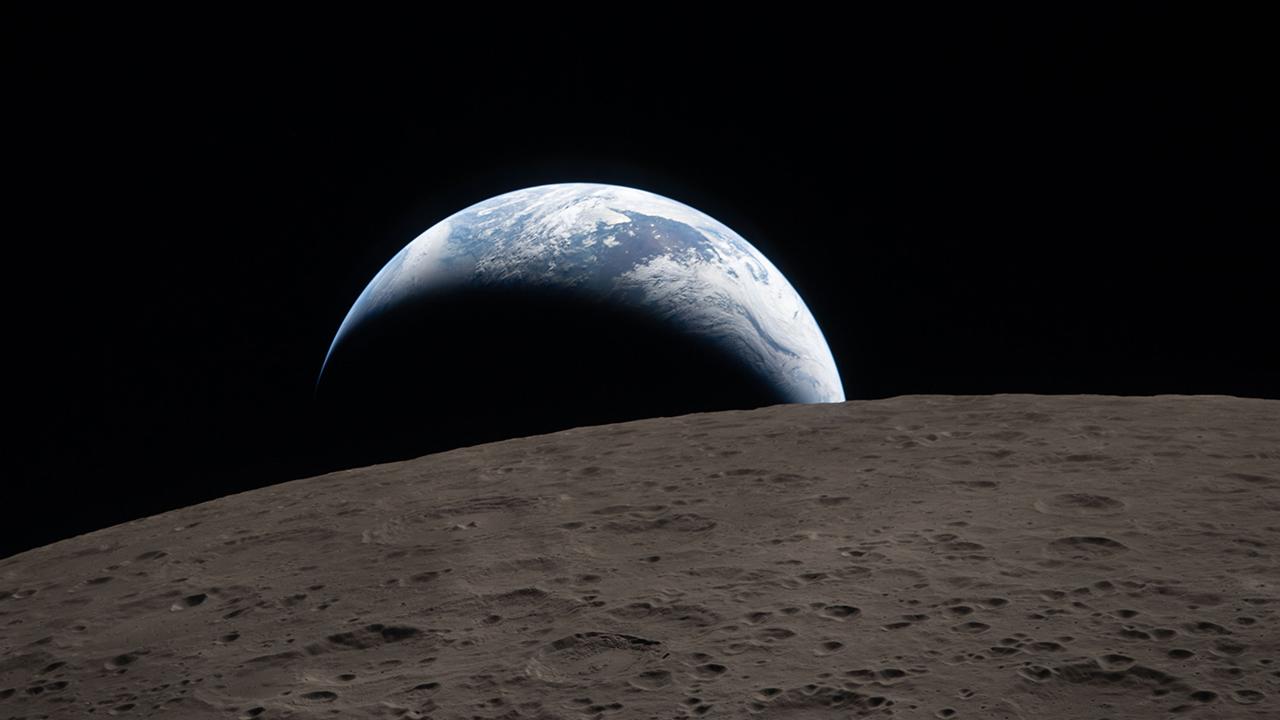
Although planetary scientists agree that a massive celestial body called “Theia” struck Earth about 4.51 billion years ago and formed the moon, the details of this collision are still a major mystery. White minerals covering the moon's surface prove that the celestial body was once a vast magma ocean with temperatures of thousands of degrees.
Laboratory experiments conducted at Vrije University Amsterdam are trying to understand how this molten mass solidifies by replicating the enormous pressure and temperature conditions deep inside the moon. However, the available physical data do not fully agree with the theoretical models.
Chemical similarity paradox
The biggest problem with moon formation is that classical simulations predict that the moon should have been formed largely from an impacting foreign body (theia). If Theia had come from another part of the solar system, its chemical structure would have been different than Earth's. However, the samples brought back by the Apollo missions show that the moon is, in the truest sense of the word, a “copy of the Earth.”
This situation has led scientists to consider more radical scenarios, such as that the Earth was not fully formed at the time and was completely disrupted by a collision with another body of the same size.
Zero point of our planet
Understanding the origin of the Moon is actually tantamount to understanding how it reshaped the history of the Earth we live on and how it came to be today. Research shows that this gigantic collision completely changed the geological history of the Earth.
Although humanity set foot on the lunar surface decades ago, the question of how this trusty satellite we see in the sky every night became detached from or attached to our planet remains one of the greatest unsolved mysteries in modern astronomy.
Bir yanıt yazın