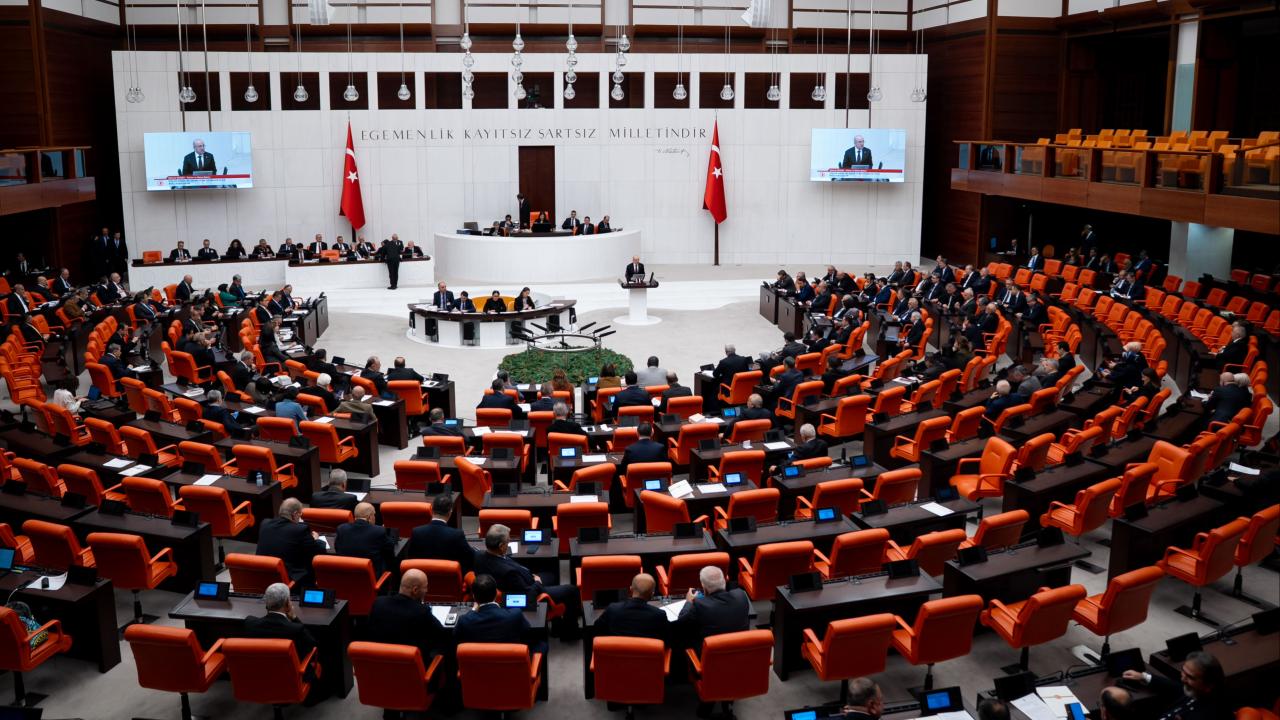
A provision on postponing the application of inflation accounting has been added to the bill amending the Turkish Penal Code and some laws passed by the Turkish Grand National Assembly.
According to the Ministry of Finance and Finance, in accordance with the relevant article of the Tax Procedure Law, if the conditions for inflation adjustment are met, the annual financial statements must be subject to inflation adjustment in the accounting periods in which the conditions are met.
According to the regulation adopted this evening in the General Assembly of the Grand National Assembly of Turkey, the financial statements in the 2026 and 2027 accounting periods, including the 2025 accounting period and the provisional tax periods (from the accounting periods ending in 2026, 2027 and 2028 for those assigned to a special accounting period), are not subject to inflation adjustment, regardless of whether the conditions for inflation adjustment under the Article 298 bis of the Tax Procedure Act was met. The President can extend this period for another 3 years.
The wishes of taxpayers and experts were taken into account
Taxpayers and experts have been calling for a postponement of the inflation adjustment for some time. For small and medium-sized taxpayers, the inflation adjustment entailed both a workload and an additional tax liability. In addition, there was a risk of additional taxes and penalties if the application was not carried out properly.
When evaluating the applications, the Turkish Grand National Assembly also took into account that taxpayers were given the opportunity for continuous reassessment with the provisions of the Tax Procedure Law and that their financial reports were exempted from the inflation effect by applying the inflation correction in the 2023 and 2024 accounting periods. In this context, it was decided to postpone the application for inflation adjustment until the accounting periods 2025, 2026 and 2027, even if the requirements are met.
The postponement decision does not prevent a reassessment of the economic assets
According to the regulation, taxpayers can reassess their depreciated economic assets in the years in which the inflation correction is postponed, as well as in the periods in which the correction conditions are not met.
In other words, taxpayers will revalue their depreciable assets and allocate their depreciation based on the revaluation amount and will not pay taxes based on that valuation.
Some organizations that previously did not take into account the profit-loss difference resulting from the inflation adjustment made in the 2024 accounting period when determining the result will not make inflation adjustments in the 2025, 2026 and 2027 accounting periods.
These organizations are banks, finance leasing, factoring, companies within the meaning of the Financing and Savings Financing Companies Act, payment and electronic money institutions, approved foreign exchange institutions,
They are listed as asset management companies, capital market institutions, insurance and reinsurance companies, pension companies, companies in liquidation and bankruptcy, as well as economic state-owned enterprises and public economic enterprises within the scope of the Legislative Decree on public economic enterprises.
Bir yanıt yazın