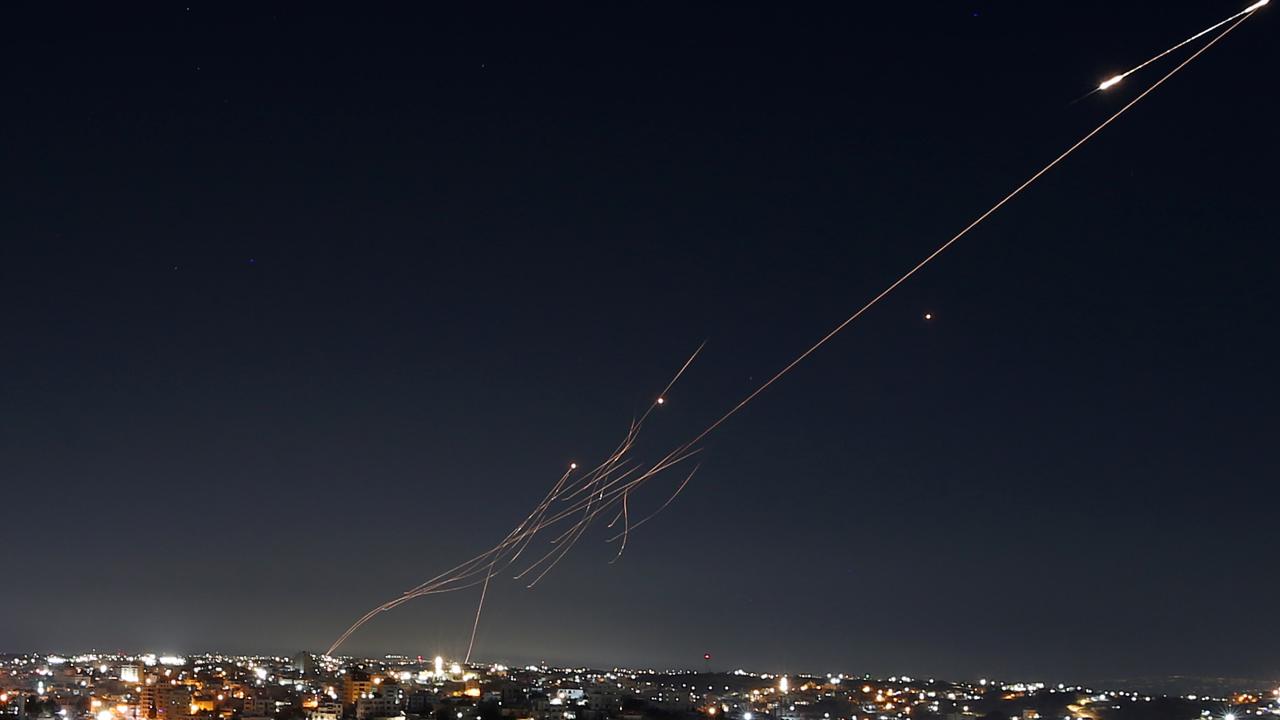
Israel and the US launched a military attack on Iran on February 28, while negotiations between the governments of Tehran and Washington were still ongoing.
Iran responded with attacks on targets it identified in some countries in the region, particularly Qatar, the United Arab Emirates and Bahrain, where US bases are located, as well as Israel.
The American-Israeli attacks killed many high-ranking officials as well as Iranian leader Ali Khamenei.
Assessing how long the attacks against Iran will last, US President Donald Trump said: “As far as timing goes, we are currently ahead of our projections. We predicted the attacks would last four to five weeks, but we have the capacity to continue longer. We will do it.” he said.
Brigadier General Ibrahim Cebbari, adviser to the commander general of Iran's Revolutionary Guard, said that in response to US and Israeli attacks they had blocked passage through the Strait of Hormuz and that they would attack ships trying to pass through the Strait.
The closure of the Strait of Hormuz increased concerns that global trade, particularly oil trade, could be disrupted.
Increasing tensions in the region led to increased risk perception in the markets and resulted in significant fluctuations in global markets.
While geopolitical tensions pushed up shares of companies in sectors such as defense and energy, there was selling pressure in sectors such as airlines and tourism.
US markets rebounded with a decline after opening
The New York stock market opened Monday with a decline on concerns about conflict in the Middle East.
US markets, which were volatile during the day, ended the first trading day of the week on a mixed note as investors viewed the declines as a buying opportunity.
At the end, the Dow Jones index fell by 0.15 percent to 48,904.78 points. The S&P 500 index rose 0.04 percent to 6,881.62 points and the Nasdaq index rose 0.36 percent to 22,748.86 points.
The VIX index, known in markets as the “fear index” and tracking the fluctuations of the S&P 500, fell to 21.5 after rising above 25 during the day and hitting a three-month high.
American airline stocks fell
Among the sectors most affected by rising tensions in the Middle East were airlines, which suspended flights in the region.
Shares of American airline Delta lost 2.2 percent, shares of United Airlines lost 2.9 percent and shares of American Airlines lost 4.2 percent.
There was a rise in shares of defense industry companies. The shares of the American defense company Lockheed Martin rose by 3.3 percent, the shares of RTX by 4.7 percent, the shares of Northrop Grumman by 6 percent and the shares of Kratos Defense & Security Solutions by 5.3 percent.
While energy company stocks rose as oil prices accelerated, shares of Exxon Mobil rose 1.1 percent, shares of Chevron rose 1.5 percent, shares of ConocoPhillips rose 4.2 percent and shares of Occidental Petroleum rose 2.1 percent.
European stock markets fell
European stock markets struggled to pare losses throughout the day. The leading index Stoxx Europe 600 ultimately lost 1.65 percent of its value to 623.36 points.
In England, the FTSE 100 index fell by 1.2 percent to 10,780.11, in Italy the FTSE MIB 30 index fell by 1.97 percent to 46,280.4 points, in France the CAC 40 index fell by 2.17 percent to 8,394.32 and in Germany the DAX 40 index lost 2.42 percent to close at 24,672.4 points.
Concerns about the spread of war hit the travel and tourism sector in Europe the hardest.
While TUI, the tourism group with the weakest performance in the MDAX, lost 9.9 percent in value, shares in the German airline Lufthansa fell by 5.2 percent. Lufthansa announced that it would suspend its flights to the Middle East from Saturday due to the risks in the region.
JPMorgan analyst Harry Gowers noted in his analysis that conflicts centered on Iran directly threaten airline profitability. Gowers stressed that flight cancellations, operational disruptions, rising oil prices and falling demand reduced investor appetite.
Mixed trend in European defense industry stocks
Military mobility in the region initially gave defense industry stocks a strong boost. German defense technology manufacturer Hensoldt rose 4.9 percent and gearbox manufacturer Renk rose 3.6 percent.
BAE Systems' British shares rose 6.1 percent and Italy's Leonardo shares rose 2.5 percent.
Rheinmetall shares, on the other hand, gave up their daily gains and fell by around 2.2 percent at the end, thus remaining below the market average.
“Freight” acceleration in logistics and shipping
With the closure of passages in the Strait of Hormuz, expectations of an increase in freight prices and a decrease in capacity increased demand for European shipping companies.
Shares in container shipping giant Hapag-Lloyd rose 6.35 percent. Shares in Maersk, one of the Danish shipping giants, also rose by 7.61 percent. Both companies announced that they had suspended transit through the Strait of Hormuz indefinitely for security reasons.
Analysts described the reaction from European investors as “cautious and measured.” It was noted that market expectations that the conflict would be short-lived still remained.
Bir yanıt yazın