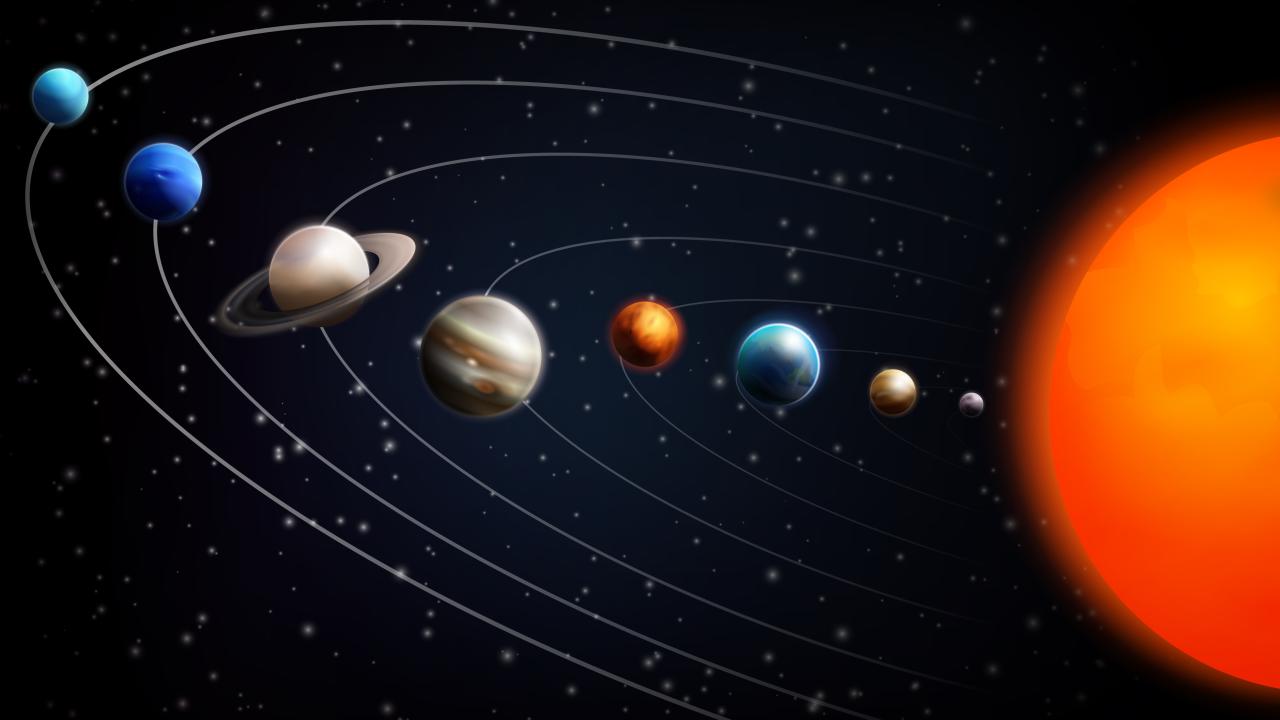
As astronomers have explored the universe over the past two and a half centuries, the number of planets in the solar system has not remained constant.
While only 6 planets were known in 1776, with new discoveries and changing scientific criteria this number increased from time to time to 9 and for a short time even to 11; Today 8 planets were officially decided.
This dynamic picture shows that science does not consist of absolute truths, but is a process that is constantly updated in the light of new findings.
As discoveries increased, classifications also changed.
With the development of telescope technology, humanity has not only discovered new worlds, but also changed the way it describes celestial objects.
The map expanded with the discovery of Uranus in 1781 and became even larger with the discovery of Ceres between Mars and Jupiter in 1801.
With the discovery of Ceres and three similar objects, the number of planets temporarily increased to 11. However, scientists realized that these objects had a different structure and classified them as “asteroids”.
The discovery of Neptune in 1846 and Pluto in 1930 gave rise to the 9-planet model, which was accepted for many years.
The Discovery That Dethroned Pluto: The Kuiper Belt
Until the end of the 20th century, the structure of the solar system was considered quite clear and orderly. However, in the early 1990s, the Kuiper Belt was discovered beyond Neptune, containing thousands of Pluto-like icy objects.
This discovery showed that Pluto is not actually a unique planet, but just a member of a vast collection of icy bodies.
After this major shift in mentality, in 2006 the International Astronomical Union introduced the requirement that a celestial body can only be considered a planet if its orbit is free of other small objects. Since Pluto did not follow this rule, it was given the status of “dwarf planet” and the official number fell back to 8.
The exploration process continues in the depths of space
Experts emphasize that changing names and classes does not change the nature of celestial bodies, but paves the way for science to ask the right questions.
Just like dinosaur fossils, whose names have been changed in the past based on new discoveries, the world of astronomy is constantly renewing its definitions as it learns more about the universe.
Humanity, which two hundred and fifty years ago only knew of 6 planets, now knows that it is only at the beginning of its journey to the limits of the solar system and holds open the possibility that new discoveries in the future will change this number again.
Bir yanıt yazın