With tensions escalating in the Middle East at the end of February, global energy markets experienced a significant upswing.
For Germans, who already have to deal with a complex national energy transition, price increases at gas stations have become an additional burden.
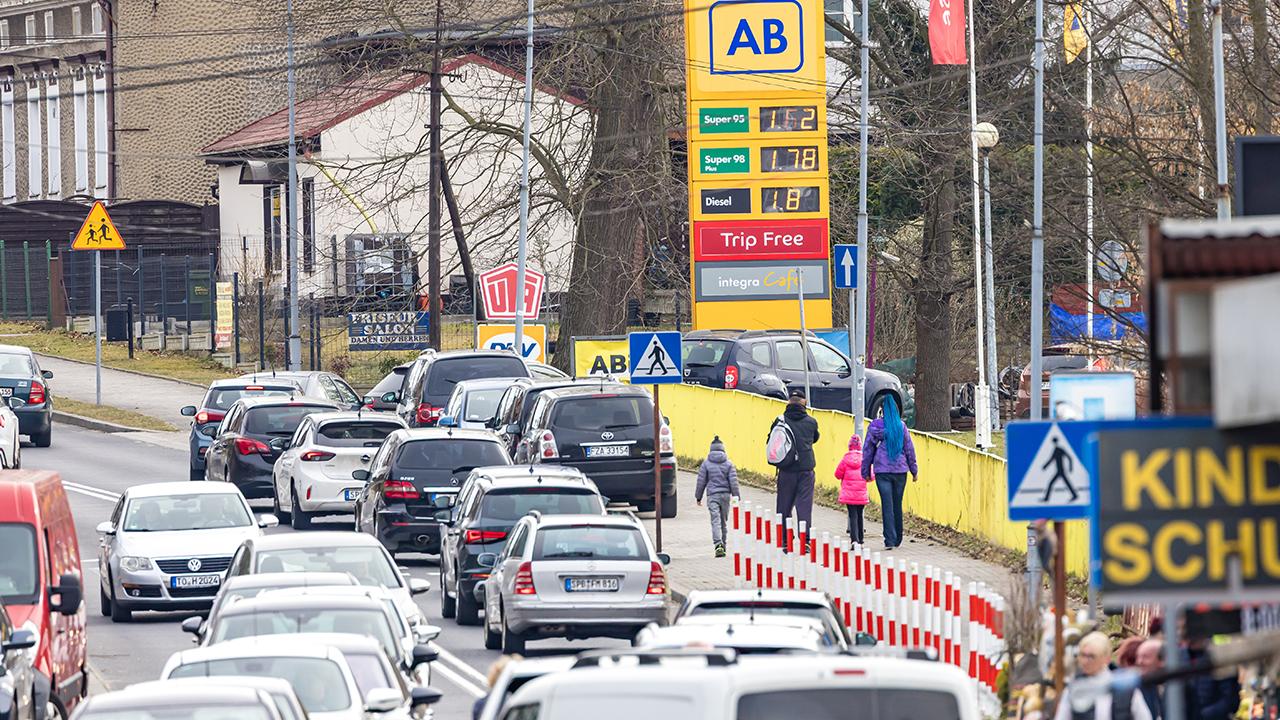
Filling up with just over half a tank of gas at a gas station near Berlin now costs 96 euros, up from about 70 euros before the US and Israel's war against Iran.
Price difference gap on both sides of the border
In the border town of Frankfurt (Oder), which is about 90 minutes by car from Berlin, diesel prices rose to 2,149 euros per liter and gasoline to 2,029 euros.
In the Polish town of Slubice, just across the bridge, the situation is completely different. Here, a liter of gasoline costs around 1.61 euros, which means a saving of around 30 euros per tank for German drivers.
Markus, a local employee who buys fuel on the German side, summarizes the situation as follows: “I only buy fuel here because it is a company car and I have to comply with tax regulations. If I had my own vehicle, I would immediately cross the bridge. There it is about 40 cents cheaper per liter.”
“Tank tourism” has become a new trend
For some Germans, this trip is more than just a quick refueling and has developed into a kind of “tank tourism”.
Publishing director Thomas Genoth, who traveled more than 200 kilometers from Halle to Slubice with his wife, says that after refueling they bought cheaper food and household goods and then ate a traditional Polish meal.
Genoth, who served in the military in the 1980s, expressed dismay at the current geopolitical situation, saying: “It feels like the energy pressure is always falling on ordinary people.”
Inspection measure by German authorities
German authorities have increased controls at border crossings to prevent the illegal transport of cheap fuel.
While motorists were allowed to fill their tanks, the amount of additional, tax-free fuel they were allowed to carry was limited to 20 liter canisters.
The federal government is accelerating a new aid package to protect consumers from sudden price fluctuations.
As part of this package, it is also stipulated that gas stations are only allowed to increase their prices once a day.
In his statement on his social media account, Chancellor Friedrich Merz emphasized the government's determination to alleviate this burden: “The rising gas prices due to the crisis in Iran are causing many people concern.”
Bir yanıt yazın