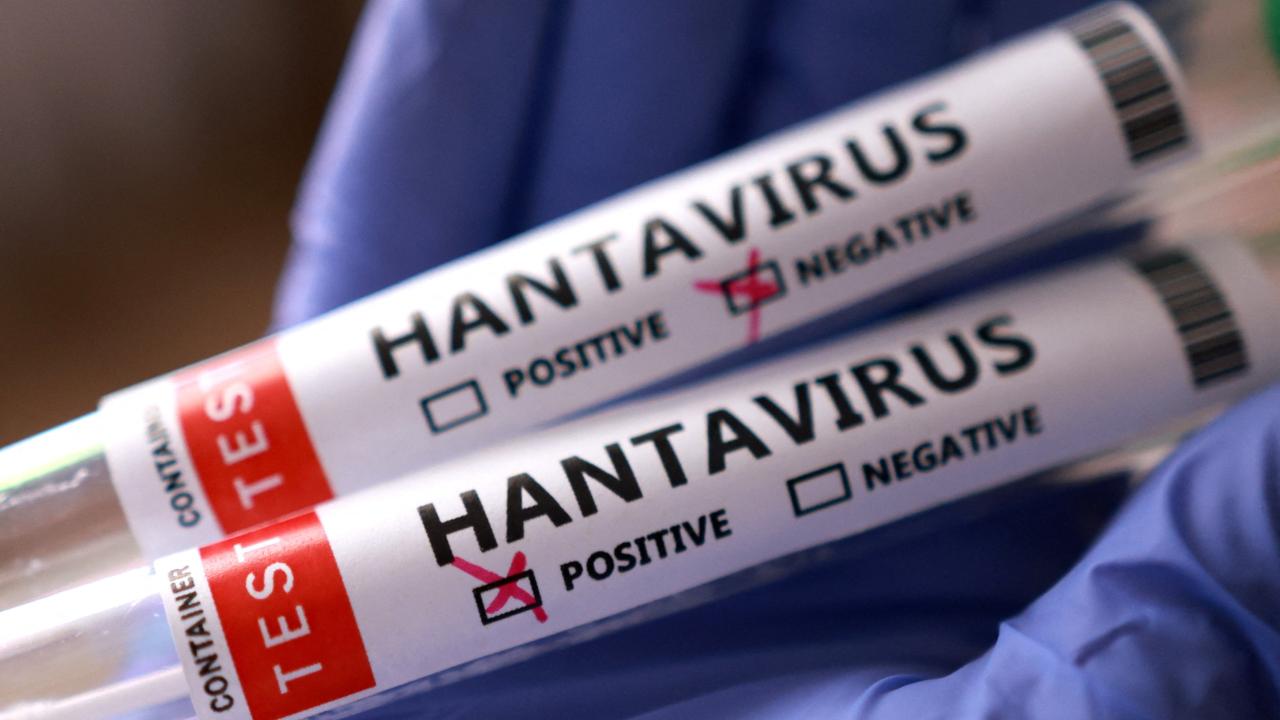
The statement from Britain's health regulator UKHSA said the suspected case was found on the island of Tristan da Cunha in the South Atlantic, where the ship stopped in the middle of last month.
The statement said that none of the British citizens currently on the ship had symptoms, but their condition was being closely monitored.
The statement stressed that the ship is expected to dock in the Canary Islands at the weekend and that a private charter plane will be available to take the British passengers and crew back to the country.
The statement said passengers returning to England may be asked to isolate for 45 days even if they do not show symptoms.
This brings the number of confirmed or suspected British cases linked to the epidemic to 3.
Hantavirus cases confirmed in two British citizens
It was announced that one of the British citizens with confirmed hantavirus cases was 56-year-old retired police officer and expedition leader Martin Anstee.
Anstee was evacuated from the ship on Wednesday 6 May and taken to the Netherlands with a Dutch crew and a German passenger. His condition was reported as stable.
It was reported that another British passenger, aged 69, was transferred to South Africa on April 27. It was noted that the condition of the British citizen, who was being treated in intensive care, was improving.
On the other hand, it was reported that two British citizens were in voluntary isolation in England due to possible contacts, and it was noted that these people had not yet experienced any symptoms.
Hantavirus
Hantavirus is known as a disease transmitted primarily by rodents.
The virus, which is transmitted by inhaling air mixed with dried feces, urine and saliva of rodents and sometimes through bites or scratches by rodents, presents with symptoms such as fever, fatigue and muscle pain.
The virus, which can also cause respiratory failure, causes internal bleeding and kidney failure in some cases.
Bir yanıt yazın