The US and Israeli attack on Iran and Iranian retaliation led to a severe economic downturn in many sectors of the Gulf states, particularly energy production, trade routes, logistics, finance and tourism. The daily balance of the first three weeks of the war made clear the damage inflicted on regional economies.
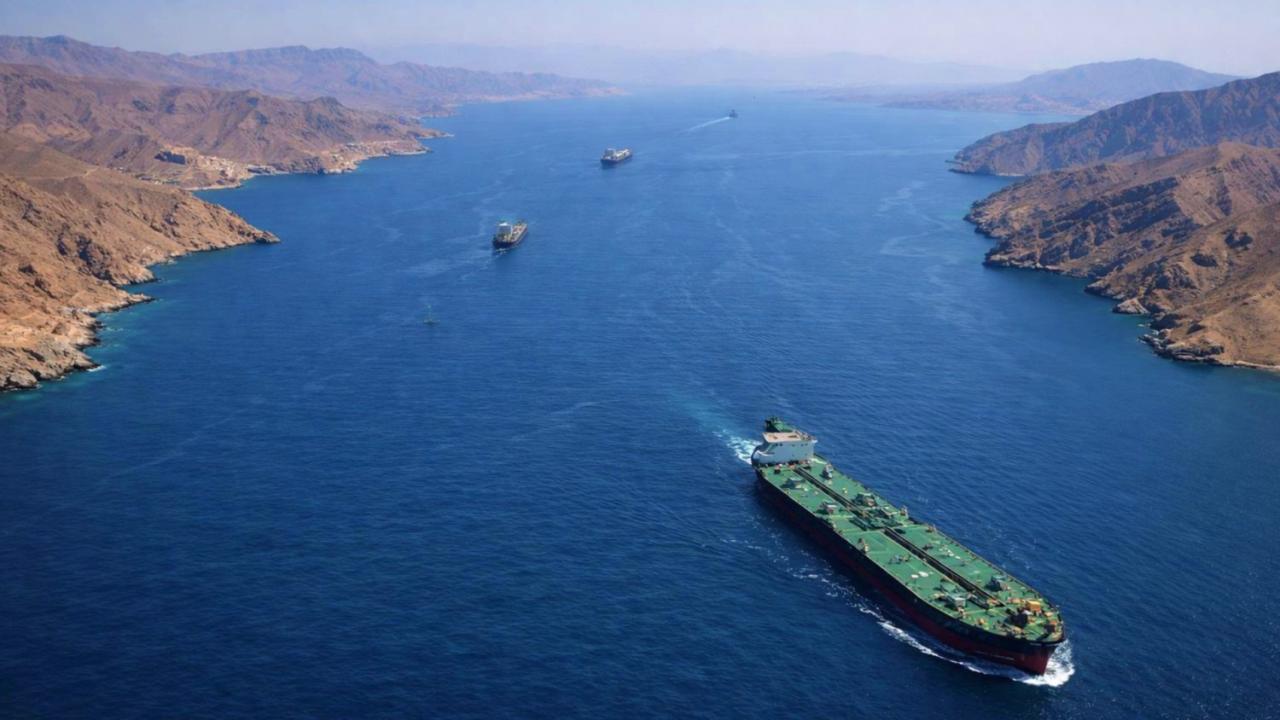
While the Gulf region accounts for about a third of global supply, with oil production of about 30 million barrels per day, it is also home to the Strait of Hormuz, through which about 20 percent of global oil trade passes.
Natural gas shipments from Qatar and the United Arab Emirates, which account for about 20 percent of global LNG exports, as well as most oil exports from countries such as Saudi Arabia, Kuwait and Iraq, will be opened to global markets through this route.
In the third week of the war between the United States, Israel and Iran, Gulf oil exports fell by more than 60 percent, from 25.1 million barrels per day to 9.7 million barrels.
According to the International Energy Agency (IEA), 25 percent of oil shipments by sea pass through the Strait of Hormuz. Major Asian economies such as China, Japan, South Korea and India import significant amounts of oil from the Gulf region. 44 percent of the crude oil emanating from here is exported to China and India.
Largest oil supply disruption in modern history
The cut of about 15 million barrels in question is considered one of the largest oil supply disruptions in modern history. While the loss in Gulf oil revenues over the past two weeks, excluding LNG and petrochemical revenues, is estimated at $25 billion, this amount is feared to rise further with the inclusion of LNG and other products.
The fact that trade in crude oil and petroleum products through this strategic passage has come to a standstill has exacerbated supply concerns in oil markets and led to sharp price increases.
After oil prices quickly exceeded $100 per barrel during this period, IEA member countries agreed to bring a total of 400 million barrels of emergency oil stocks onto the market. The move prevented the uncontrolled rise in oil prices and allowed refineries to procure crude oil at short notice.
While analysts say this alone is unlikely to lead to a sharp drop in oil prices, it is predicted that price increases could slow and panicked fluctuations in the market could be limited for a while.
Saudi Arabia's daily loss reached almost a billion dollars
Oğuzhan Akyener, President of Turkey Energy Strategies and Policies Research Center (TESPAM), said in his assessment to the AA correspondent that the total loss of Saudi Arabia, the United Arab Emirates, Qatar, Kuwait, Oman, Bahrain and Iraq due to the energy crisis is estimated at about $2.3 billion per day.
Stating that Saudi Arabia ranks first with $230 billion when we look at countries' annual oil and natural gas revenues, Akyener said: “This country is followed by the United Arab Emirates with $140 billion, Qatar with $120 billion, Kuwait with $100 billion, Oman with $55 billion and Bahrain with $15 billion. The state of Saudi Arabia is the world's largest oil exporter and leader of the Organization for the Export of Petroleum.” Countries (OPEC) “Oil revenues account for 60 percent of their revenue.” “Given developments over the past two weeks, it is estimated that Saudi Arabia's daily loss is approaching a billion dollars,” he disclosed his information.
Akyener stated that the UAE has a daily oil production of 3 million barrels and that about 60 percent of the country's revenue comes from oil and natural gas revenues.
Akyener pointed out that the UAE's daily loss due to the Strait of Hormuz crisis was estimated at $350 million, continuing as follows:
“80 percent of Qatar's revenue, the world's largest LNG producer and exporter, comes from natural gas exports. Natural gas is the main source of the country's economy. Recent events are reflected in the Qatari economy in a loss of $300 million per day. Qatar's LNG exports, which have to use Hormuz to ship LNG tankers, have come to an almost complete standstill. Kuwait, one of the Gulf states, has a daily oil production capacity of 2.8 million.” The country's economy has a daily oil production capacity of approximately $200 million per day.
Akyener stated that Oman's daily oil production is one million barrels and 70 percent of the country's income comes from natural gas and oil production.
Stating that oil revenues account for 75 percent of the income of Bahrain, the smallest Gulf state, Akyener said Bahrain's economic loss in the process was $40 million a day.
Akyener emphasized that Iraq is one of the countries most affected by the war:
“While more than 94 percent of Iraq's oil exports passed through this strait, the country's oil exports were hit hard by Iran's attacks on tankers carrying Iraqi oil and the virtual cessation of ship passage through the Strait of Hormuz. Iraq's oil production fell from 4.2 million barrels per day to about 1.2 million barrels during this period. Iraq's economic loss from this crisis does not apply to the countries of the Arab Cooperation Council Gulf states count countries that are geographically a country in the Persian Gulf. It is expected to be worth 300 million dollars a day.
Gulf states that can cross the Strait of Hormuz with pipelines are in the minority
The Strait of Hormuz, a narrow sea route that connects the Persian Gulf with the Indian Ocean, is considered a strategic “throttle point” for energy trade. The Gulf states of Qatar, Kuwait and Bahrain are almost 100 percent dependent on the Strait of Hormuz. Iraq, Saudi Arabia, the United Arab Emirates and Iran can carry some of their exports through pipelines without using the strait.
Saudi Arabia, which is trying to make up for its losses in the Strait of Hormuz with pipelines, relies on the East-West Crude Oil Pipeline, which stretches from the east to the west of the country and has a capacity of 5 million barrels of oil per day, while the United Arab Emirates relies on the Abu Dhabi Crude Oil Pipeline, which stretches from the national capital Abu Dhabi to Fujairah on the Arabian Sea coast and transports 1.5 million barrels of oil per day. Iraq, on the other hand, can open itself to the world through the Kirkuk-Ceyhan oil pipeline.
Bir yanıt yazın