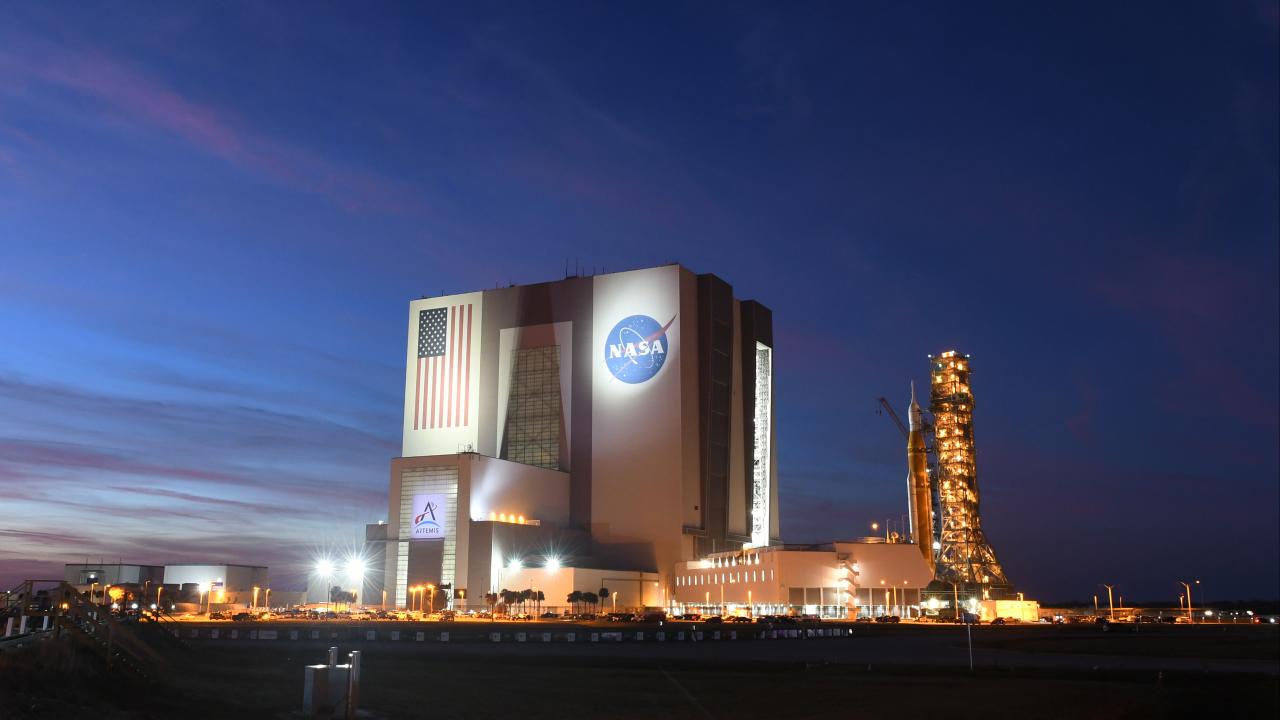
As human spaceflight gains momentum with the US National Aeronautics and Space Administration's (NASA) Artemis II mission, the mission aims to have the four-person crew test spacecraft systems, examine previously unobserved regions of the Moon and identify suitable areas for future manned landings.
While human spaceflight makes a significant contribution to scientific development, it also increases competition between countries in the space domain.
Space exploration, which has accelerated since the mid-20th century, has brought both technological advances and discoveries. The desire to be at the forefront of this process has led to countries investing more in space exploration.
The United Nations (UN) celebrates April 12, the day of the first manned flight, as “International Manned Spaceflight Day” to draw attention to the importance of manned spaceflight.
The beginning of space travel
The first major step in space exploration was taken when the former Union of Soviet Socialist Republics (USSR) launched the Sputnik 1 satellite into orbit in 1957.
This development triggered the space race between many countries, especially the USA and the USSR.
The Soviet cosmonaut Yuri Gagarin becoming the first person to enter space in 1961 was an important turning point that ushered in humanity's space age.
Successes in this field expanded when Soviet astronaut Valentina Tereshkova became the first woman to orbit the Earth in 1963.
US space programs
Competition between the USA and USSR during the Cold War also affected space exploration. The USA has launched the Mercury, Gemini and Apollo programs in this area.
Alan Shepard was the first American astronaut in space in 1961, while Neil Armstrong made history in 1969 when he became the first man to walk on the moon.
When he landed on the moon, he recalled: “One small step for man, one giant leap for mankind.” With the statement, Armstrong emphasized the importance of manned space travel for the development of humanity in general.
Lunar missions ended for a time when astronaut Eugene Cernan became the last person to walk on the moon in 1972.
Artemis program
After nearly half a century, NASA is preparing to send astronauts to the moon again as part of the Artemis program.
While the Artemis I mission, the first step of the program, was carried out without a crew in 2022, the Orion spacecraft completed its mission in lunar orbit and successfully returned to Earth.
The second phase of the program, the Artemis II mission, began with launch from Kennedy Space Center on April 1.
During the mission, the team, consisting of a total of four people, will test the spacecraft's systems, image previously unseen parts of the moon and examine areas where landings can be carried out on future missions.
During the mission, the crew traveled approximately 406,000 kilometers from Earth, the furthest distance ever achieved in human spaceflight.
NASA said the distance exceeded the record set by the Apollo 13 mission and called Artemis II a new milestone in human lunar exploration.
The next phase of the program, Artemis III, is intended to make the first manned landing on the south pole of the moon.
International collaborations
The International Space Station (ISS), which was built in the 1990s through joint work by the USA, Russia, Japan, Canada and European space agencies, is considered an important research platform that brings together scientists from different countries.
Since the first crew arrived at the station in 2000, more than 270 astronauts have served on the ISS.
Meanwhile, while China conducted its first manned spaceflight with Yang Liwei in 2003, India is reportedly planning to launch its first manned mission in the coming years.
Bir yanıt yazın