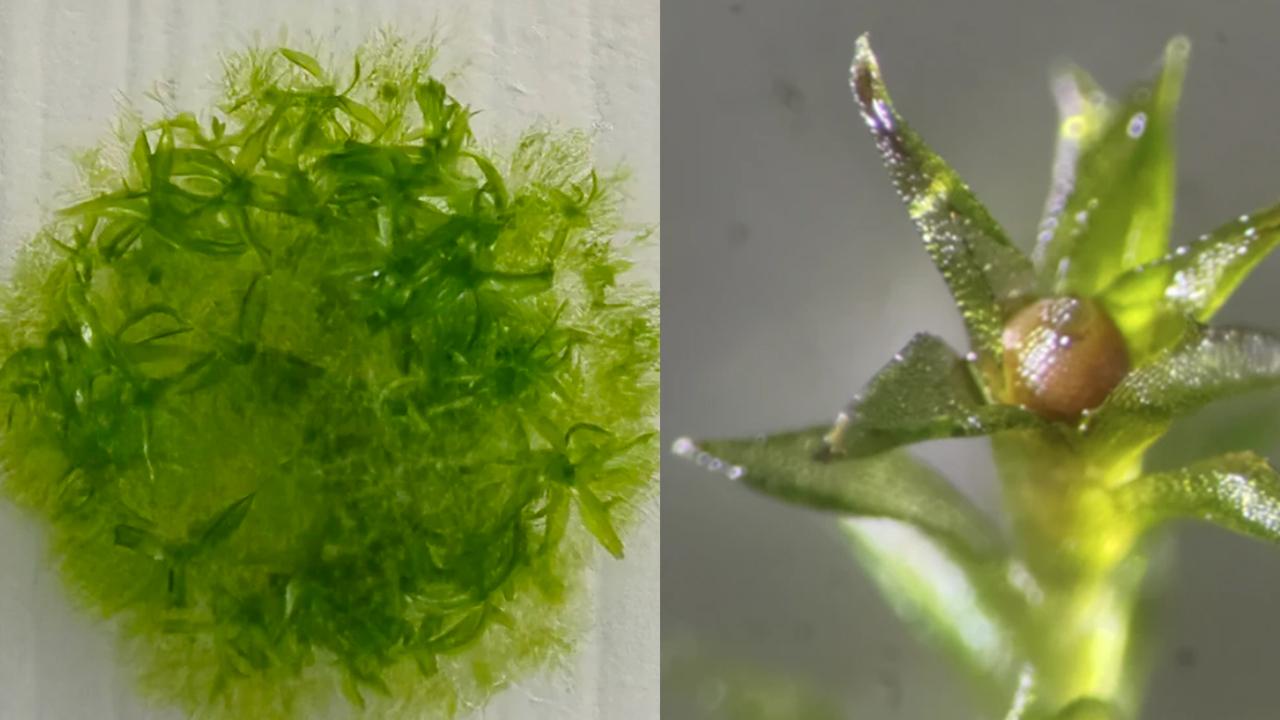
The experiment was launched in 2022 by researchers led by Tomomichi Fujita from Japan's Hokkaido University.
Sporophytes of the algae species Physcomitrium patens were sent to the ISS in a cargo vehicle in March 2022 and assembled by astronauts outside the station.
The samples were exposed to the space environment unprotected for 283 days. In the samples brought to Earth in January 2023, it was observed that more than 80 percent of the spores survived and 90 percent of them germinated again in the laboratory.
Researchers say the structural shell surrounding the spores may have provided protection from strong UV radiation.
It is stated that mosses evolved over a period of 450 million years by adapting to extreme conditions and that this resilience is an important advantage for the survival of terrestrial life during times of mass extinction.
Hope for space agriculture and colonization studies
Scientists say these findings could provide important information for the development of agricultural production systems in space and the creation of ecosystems on other planets such as the Moon or Mars.
Researchers believe that algae spores can survive in space for up to 15 years.
Fujita, the study's leader, said: “This small and long-lived plant has proven that life has the ability to adapt to space conditions at the cellular level. This can make a significant contribution to the creation of extraterrestrial habitats in the future.”
Bir yanıt yazın