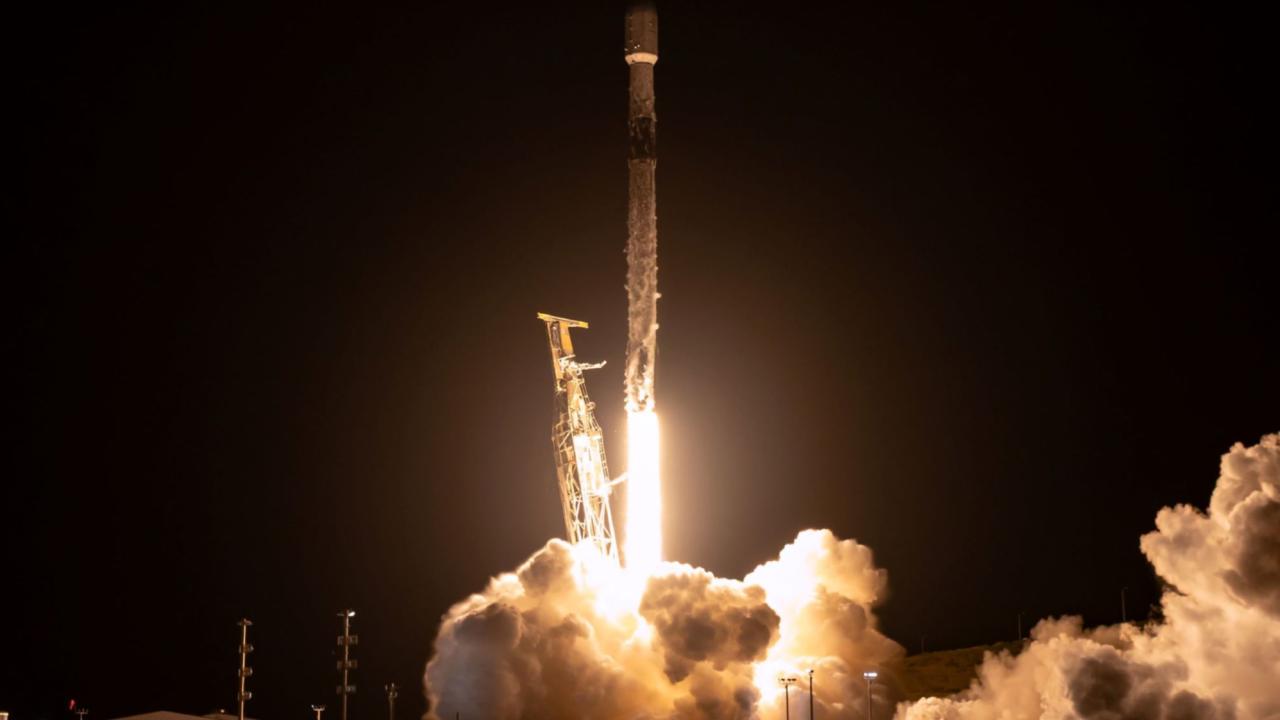
Founded by Baykar Chairman and Technology Leader Selçuk Bayraktar, Fergani Space Technologies launched FGN-100-D3, the fifth test satellite developed with its national technical capabilities, from the US Vandenberg Space Force Base at 2:02 p.m. Turkish Time (TSI) on March 30, 2026.
The satellite, launched as part of SpaceX's Transporter-16 mission, successfully separated from the launch vehicle at 15:08 GMT, about 66 minutes after launch, and reached the target orbit at an altitude of 500-520 km.
Complete independence with national technology
FGN-100-D3, with its technological innovations, represents a significant improvement compared to the satellites previously launched by Fergani.
The satellite used critical components such as reaction wheel, magnetic torque rod, magnetometer, IMU and GNSS receiver, which were fully developed domestically by Fergani. In addition to these systems, the satellite also includes an artificial intelligence-assisted computer for advanced tasks.
Verifying the national systems and avionics equipment developed in space by Fergani engineers and providing the space history of these technologies is important for Türkiye's complete independence in space technology.
New ring in space
Fergani Space continues to strengthen its role in space by achieving successive achievements in space since the beginning of 2025.
Fergani's space adventure began with the launch of the first satellite in the series, FGN-100-D1, in January 2025, and on November 2, 2025, FGN-100-D2, which weighs 104 kg and is Türkiye's largest private satellite, took its place in orbit.
This process was followed by the launch of the world's first orbital transfer vehicle based on a hybrid propulsion system (FGN-TUG-S01) into space on November 28, 2025, which had the 10 kg cubesat FRG-10D1 on board. With its innovative hybrid propulsion technology and the first ignition in space, the national YTA was an important step for our logistics capabilities in space.
Fergani Space aims to complete the Ulugh Beg Global Positioning System, which will consist of more than 100 satellites, within the next 5 years entirely using its own resources.
If this constellation project is implemented, Türkiye will be able to share this crucial competency with friendly and related regions by having its own independent navigation and communication network. While the satellite constellation is being completed, development work on the national launch vehicle continues.
Bir yanıt yazın