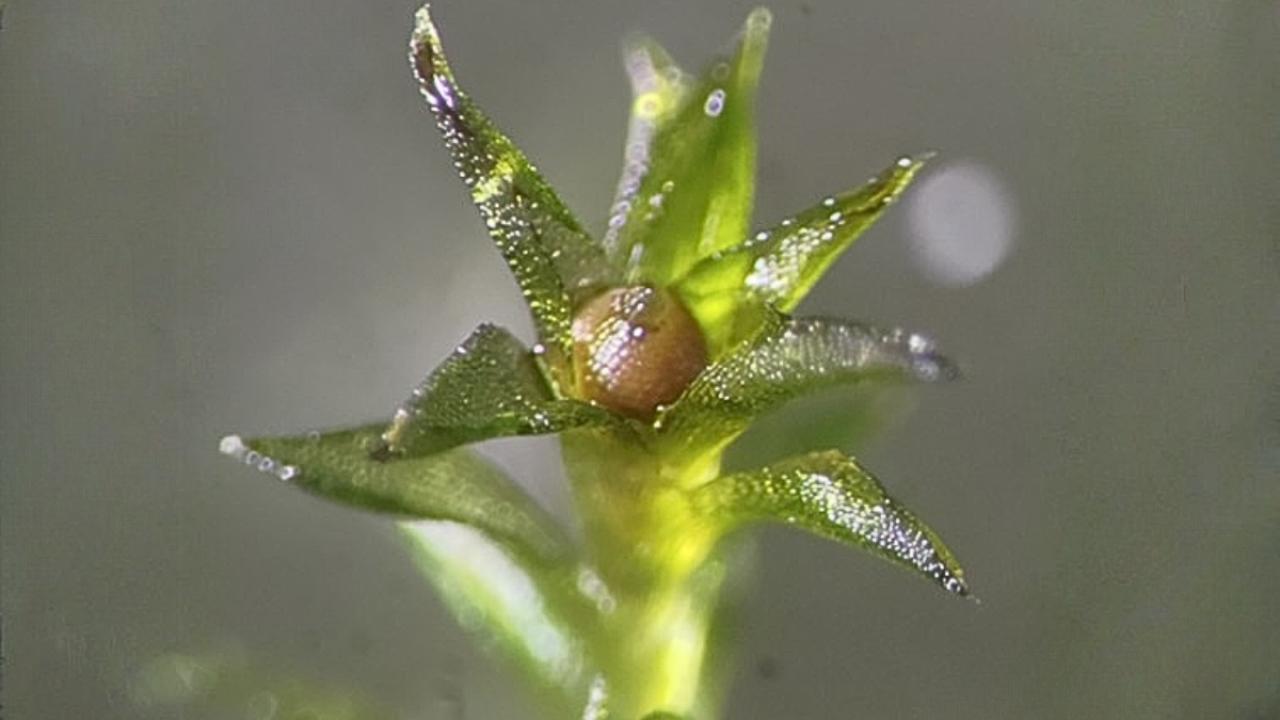
Mosses are known as the “tardigrades” of the plant world; That is, they are famous for their ability to withstand strong radiation, extreme temperatures and complete desiccation. Biologist Tomomichi Fujita and his team at Hokkaido University in Japan conducted a highly ambitious experiment to test the limits of this resilience.
The expectations were zero, the result was surprising
Seed-containing capsules of the species Physcomitrium patens, commonly used as a scientific model plant, were attached to the external surface of the ISS and directly exposed to the harsh conditions of space, namely vacuum, extreme temperatures and cosmic radiation, for nine months.
Dr. Tomomichi Fujita expressed his expectations before the experiment: “We expected almost no survival, but the result was the opposite: most of the spores survived.” Fujita said they were amazed by the extraordinary endurance of these tiny plant cells.
Space armor at the cellular level
At the end of the experiment, more than 80 percent of the algae cells returned to Earth successfully germinated and turned into normal plants. Recalling that most living things, including humans, cannot survive even a moment in space, researchers say this situation provides striking evidence that life on Earth has internal mechanisms to withstand space conditions at the cellular level.
This resilience may be the key to algae's success in the plant kingdom's transition from marine to terrestrial environments around 500 million years ago. These pioneer plants extracted nutrients from rocks and created soils that allowed life to spread throughout the arid parts of our planet.
The dream of building an ecosystem on Mars and the Moon
Previous tests on Earth had shown that other parts of the moss fell victim to frost, heat or radiation within a few weeks. However, the seeds sent into space survived despite being exposed to all of these stressors at the same time.
Dr. Fujita believes this resistance is due to the multi-layered structure that surrounds the seeds' reproductive tissue and acts as a “passive shield.”
Fujita expressed hope that the ultimate goal of the study will be a starting point for building new ecosystems in extraterrestrial environments such as the Moon and Mars. Algae research lays the scientific foundation for dreams of laying the foundations of life on other planets.
Bir yanıt yazın