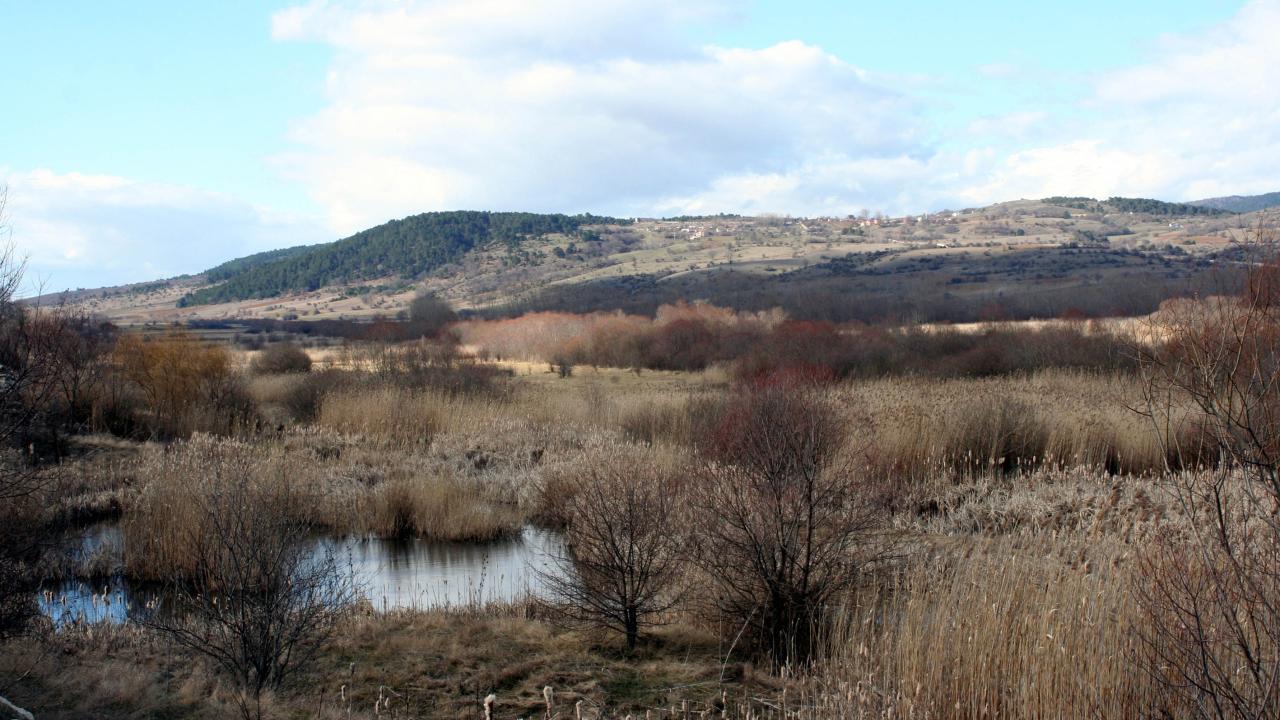
Prof. Dr. Orhan İnce, Faculty of Engineering, Faculty of Environmental Engineering, Istanbul Technical University (ITU), scientific director and research leader of the mega-scale TerrArctic project, said that peatlands drained for agricultural purposes cause annual emissions of 1.5 to 2 billion tons of carbon dioxide equivalent.
Peatlands, which were created over thousands of years by the layered accumulation of plant remains in wetlands, are also known as carbon storage areas.
The study, published by the Norwegian Bioeconomy Research Institute (NIBIO), titled “Rising water levels can turn northern cultivated peatlands into carbon sinks,” found that increasing groundwater levels to 25 to 50 centimeters below the soil surface and maintaining them at that level can significantly reduce greenhouse gas emissions.
Researchers conducted extensive field work at the NIBIO station in the Pasvik Valley in northern Norway in 2022 and 2023.
According to the results, Pasvik peatland released about the same amount of carbon dioxide during drainage as other managed peatlands in the south, while emissions fell significantly when the water table was 25 to 50 centimeters below the surface.
Methane and nitrogen oxide emissions were also lower with higher groundwater levels.
The researchers also observed that microbial activity increased when soil temperatures rose above 12 degrees.
Impact of agricultural activities
Prof. Dr. answered the questions of the AA correspondent. Orhan İnce that the changes due to agricultural drainage have turned peatlands from a carbon sink to a carbon source.
Emphasizing that peatlands, which cover about 3 percent of the world's land area, contain about 1/3 of soil carbon and the amount of stored carbon is about 500 to 600 billion tons, İnce emphasized that emissions of tens of tons of carbon dioxide equivalent can be generated per hectare per year after agricultural drainage.
The role of peatlands in carbon storage
İnce noted that peatlands in the northern belt are generally colocated with permafrost and that the amount of carbon stored in permafrost-peat systems is estimated to be around 1,300 to 1,600 billion tons. İnce pointed out that any thaw that would occur here would pose a serious risk of carbon emissions.
İnce described peatlands as natural carbon sinks that limit climate change by storing carbon stocks accumulated over millennia. “However, as oxygen input increases through dewatering and drying, microbial degradation accelerates and the stored carbon is released into the atmosphere as carbon dioxide.” Scientific studies show that greenhouse gas emissions in restored peatlands can be reduced by 50 to 90 percent and that restoring peatlands on a global scale produces approximately 0.8 to 1.2 billion tons of carbon dioxide equivalent emissions per year.” It shows that it can contribute to prevention, he said.
Drainage risk in peatlands
İnce explained the changes in greenhouse gas emissions that occur in drained soils as follows:
“According to international measurements, greenhouse gas emissions in drained peatlands can reach levels of about 20 to 40 tons of carbon dioxide equivalent per hectare per year. According to the United Nations Environment Program, global emissions from peatlands degraded by drainage and agricultural use are about 1.5 to 2 billion tons of carbon dioxide equivalent per year, accounting for about 4 to 6 percent of total greenhouse gas emissions from human activities. Drainage is also a consequence of the oxidation of Peat.” causes ground subsidence, deterioration of water balance, increased flood and drought risks and loss of biodiversity specific to peatland ecosystems.”
İnce stated that in traditional drainage-based agriculture, the carbon storage function is eliminated, but in approaches such as “rewetting” and “wet agriculture” (paludiculture), reeds, reeds, peat moss and water-tolerant plants can be grown because the groundwater table is kept close to the surface and oxygen does not enter the peat. İnce stated that carbon dioxide emissions decreased significantly after the rewetting approach.
Orhan İnce pointed out that with the rewetting method, a temporary increase in methane emissions can be observed in some cases, but the overall greenhouse gas effect decreases significantly on a 100-year time scale.
Recommendations for protecting peatlands
Pointing out that the groundwater level is the most critical factor in the carbon balance of peatlands, İnce continued his words as follows:
“While high water levels create oxygen-free conditions and enable the accumulation of carbon, falling water levels lead to oxygen entry, rapid decomposition and carbon dioxide release. Therefore, it is necessary to protect not only the area but also the hydrological balance in protecting peatlands. Fire hazards in drying peatlands. Location: Groundwater levels, carbon dioxide, methane and nitrogen oxide emissions, land subsidence and water quality should be monitored and reported regularly.”
İnce emphasized that the Arctic region is warming faster than the global average and this increases the risk of carbon dioxide and methane emissions from peatlands as permafrost thaws. İnce warned that the carbon accumulated over thousands of years as peatlands dried out could be released into the atmosphere in a few decades.
İnce added that protecting and restoring peatlands and paludiculture practices are among the most effective nature-based solutions in the fight against climate change.
Bir yanıt yazın