Lecturer of the Faculty of Engineering of Necmettin Erbakan University (NEÜ), Prof. who carries out the project entitled “New Generation Wearable Health Technologies” supported by TÜBİTAK. Dr. Bünyamin Şahin continued his studies through a 12-month research program at North Carolina State University in the USA.
The Turkish scientist, who was initially involved in a single research project, was included in two different international projects at the invitation of the host research group due to his achievements during the study process.
The new generation battery technology developed within these international projects was presented to the scientific world with the joint signature of researchers from North Carolina State University, the University of North Carolina at Chapel Hill, Rice University and Necmettin Erbakan University.
The article prepared by the research team went through the international peer review process in the journal Science Advances, which took about eight months.
After completing the revisions requested by the reviewers, the accepted study was published open access in Science Advances.
System that is biodegradable and can generate energy from moisture
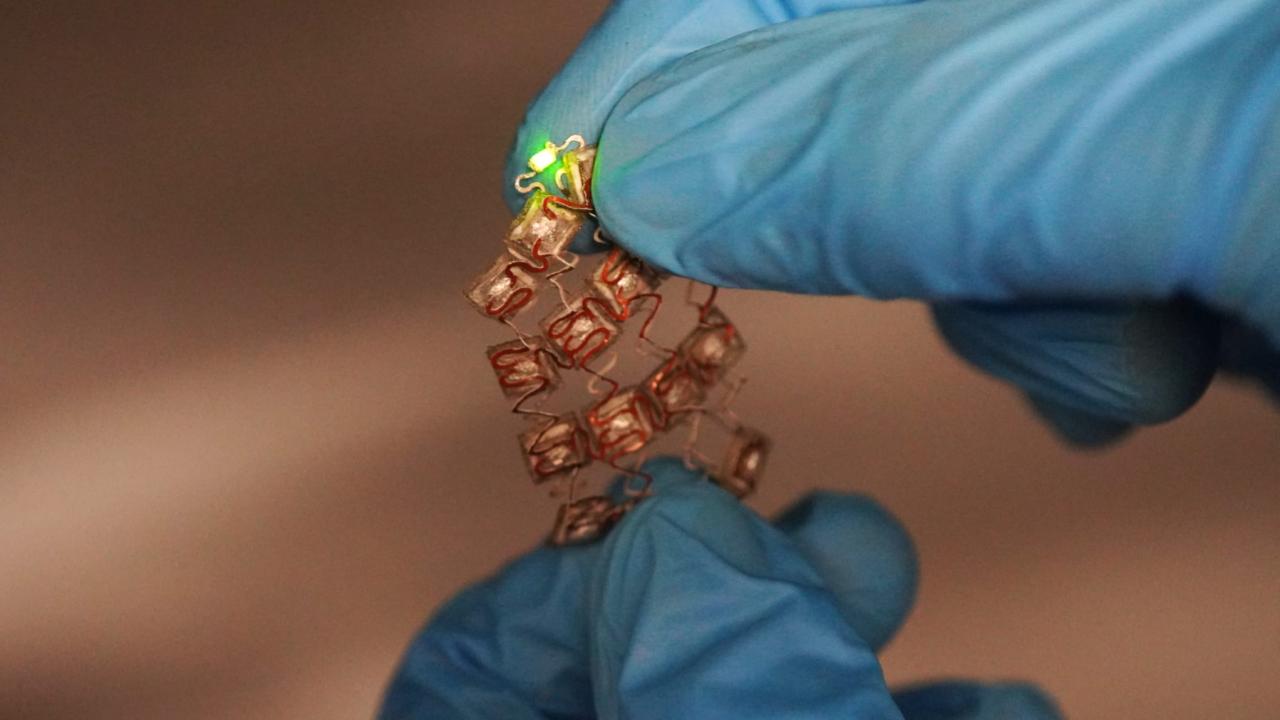
The battery developed as part of the research was made from environmentally friendly materials as an alternative to traditional chemical batteries.
The battery can generate energy from sources such as human sweat or ambient moisture. The system, which can be placed on different parts of the body with its flexible structure, is designed for use in healthcare devices.
In laboratory tests, it was shown that the system can capture the individual's physiological data and transmit it wirelessly and uninterruptedly to the central system via Bluetooth.
Researchers believe that the developed technology can create an important infrastructure that can be used in particular for applications in the field of telehealth services (telemedicine).
A new era of wearable healthcare devices
Prof. Dr. Sharing the details of the study, Şahin stated that telehealth services will be one of the important components of this field in the future, emphasizing that wearable health technologies will enable remote monitoring of patients' health status by creating continuous data.
Şahin explained that modern devices require energy and either need to be charged or use conventional batteries that contain chemicals that are harmful to the environment. The main argument of the research is the development of a flexible battery that can dissolve itself in nature and does not harm nature.
Explaining that they have developed an energy source that can expand to any part of the body and generate energy itself using the moisture in that area, Şahin said:
“An attempt was made to develop a wearable flexible battery. This battery is activated by moisture in the environment or by samples of biological fluid (sweat). To illustrate the applications in future health technology, we integrated this battery into the heart rate monitor. “We have shown through scientific experiments that the device can detect the data and send it to a control center via Bluetooth.”
Important development in terms of technology transfer
Emphasizing that this study is not only a scientific publication, but also an important achievement in terms of technology transfer, Şahin said: “We had the opportunity to collaborate with the world's leading research groups. We brought together their academic knowledge and our country's research potential. Our new studies are a continuation of the results we have achieved.” he said.
Şahin, Turkish scientist Prof. who won the Nobel Prize in Chemistry during the study. Dr. He added that he had various academic contacts at the University of North Carolina at Chapel Hill, where Aziz Sancar worked, and that he had the opportunity to meet Sancar.
Bir yanıt yazın