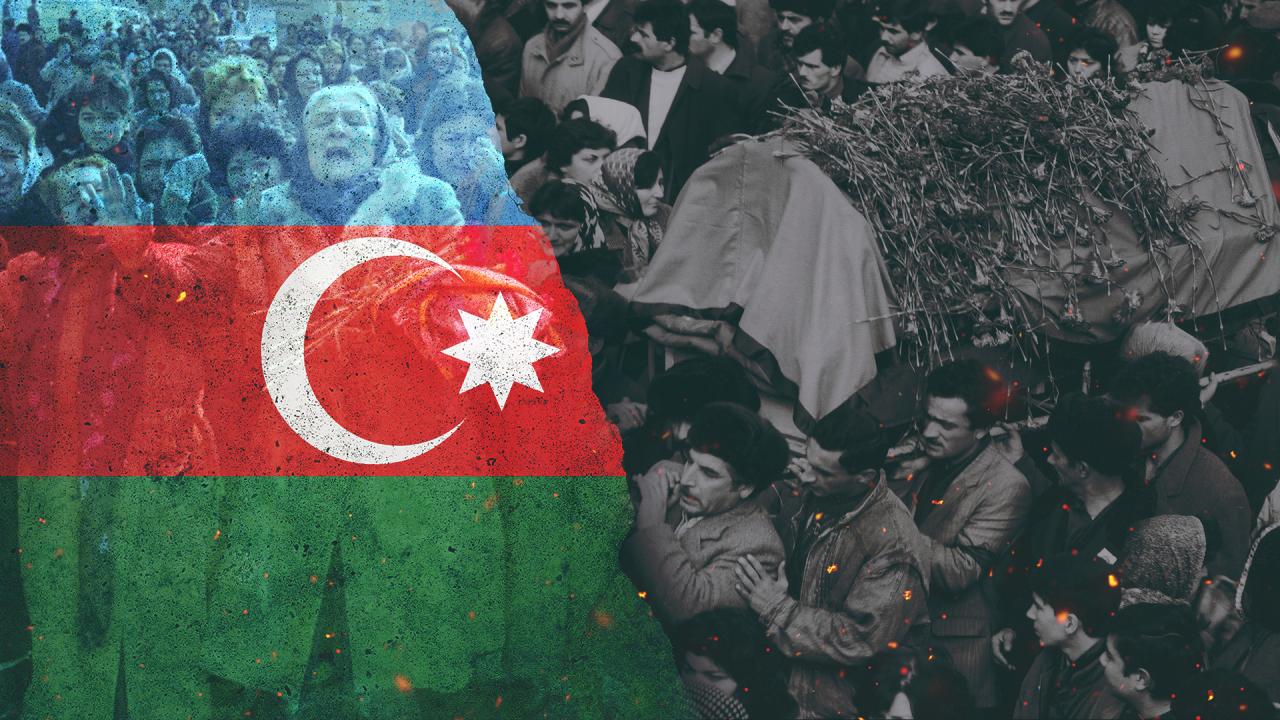
The massacre carried out by Armenian gangs on Azerbaijani territory 108 years ago is considered one of the most horrific massacres in the country's history.
At the beginning of the 20th century, during the final periods of Tsarist Russia, Armenians residing in various regions of Azerbaijan took advantage of the power vacuum and began massacring Azerbaijanis and confiscating their lands.
The Armenians, organized and armed since 1905, caused riots in all regions, especially in Baku, to intimidate the Azerbaijanis.
With the revolution in Russia in 1917, the tsarist regime was overthrown. The Bolsheviks who came to power also took power in Baku. The Armenian Bolshevik leader Stepan Shaumyan provided political and material support to the Armenian gangs, so attacks against Azerbaijanis increased.
Armenian and Bolshevik gangs massacred 50,000 Azerbaijanis in Baku, Shamakhi, Guba, Khachmaz, Lankaran, Hajigabul, Salyan, Zangezur, Karabakh, Nakhchivan and other regions between March 30 and April 3, 1918.
The massacre ended when the Ottoman army, the so-called “Caucasian Islamic Army,” came to Azerbaijan's aid and rid the country of gangs.
The atrocities and massacres committed by Armenians in Azerbaijan in 1918 are considered “genocide.”
The late President Heydar Aliyev decided to celebrate March 31 as “Azerbaijani Genocide Day” through the decree he signed in 1998.
“The events of 1918 should be recognized as genocide”
Azerbaijani Ombudsman Sabina Aliyeva stated that the events of March-April 1918 were one of the bloodiest and most tragic examples of systematic attacks against Azerbaijanis.
In her statement to the AA correspondent, Aliyeva explained that Armenians have committed systematic and brutal crimes against Azerbaijanis, especially since the beginning of the 20th century, both in various regions of Azerbaijan and in today's Armenian territory.
Aliyeva explained that thousands of innocent people were killed in this process because of their national and religious identity, pointing out that these events went down in history as mass massacres.
Aliyeva stated that international recognition of the genocide crimes committed against Azerbaijanis and ensuring justice are of great importance to prevent similar crimes against humanity from repeating in the future.
Aliyeva appealed to international organizations and United Nations (UN) member states, saying: “A principled stance should be taken against the crimes of ethnic cleansing and genocide against Azerbaijanis and the events of 1918 should be recognized as genocide.” he said.
“Azerbaijanis were targeted because of their ethnic and religious identity”
Dilgam Ahmed, a lecturer at the Azerbaijan Pedagogical University, explained that the events that occurred in Azerbaijan in 1918 were a planned massacre against the Muslim and Turkish populations, the indigenous elements of the region.
Ahmed explained that the 36-volume report of the Investigative Commission of the Republic of Azerbaijan, which declared its independence on May 28, 1918, clearly shows the scale of events in Baku and its surroundings.
Ahmed stressed that the report in question was prepared according to legal principles, explaining that the documents recorded the deaths of 11,000 people in Baku, about 10,000 people in the city center of Shamakhi and more than 10,000 people in the villages of Shamakhi, and that there were also lists with the names of the victims.
Ahmed said the mass graves unearthed in Guba were concrete evidence of what happened and that about 4,000 people were killed there.
Noting that the total death toll was at least 50,000, including the events in the Karabakh and Zangezur regions, Ahmed said that these events were systematic actions by Armenian armed groups in line with the goal of gaining more land and “Greater Armenia.”
Ahmed also stated that the Bolshevik government of the time also played an important role in the events in question and that the Bolsheviks under the leadership of Vladimir Lenin supported the Armenian groups.
Explaining that the events in the works published during the former Soviet period were portrayed as a conflict between the Musavat Party of Azerbaijanis and the Dashnaksutyun Party of Armenians, Ahmed said: “The facts were kept secret for a long time. However, what happened was a massacre in which Azerbaijanis were targeted because of their ethnic and religious identity.” gave his assessment.
Bir yanıt yazın