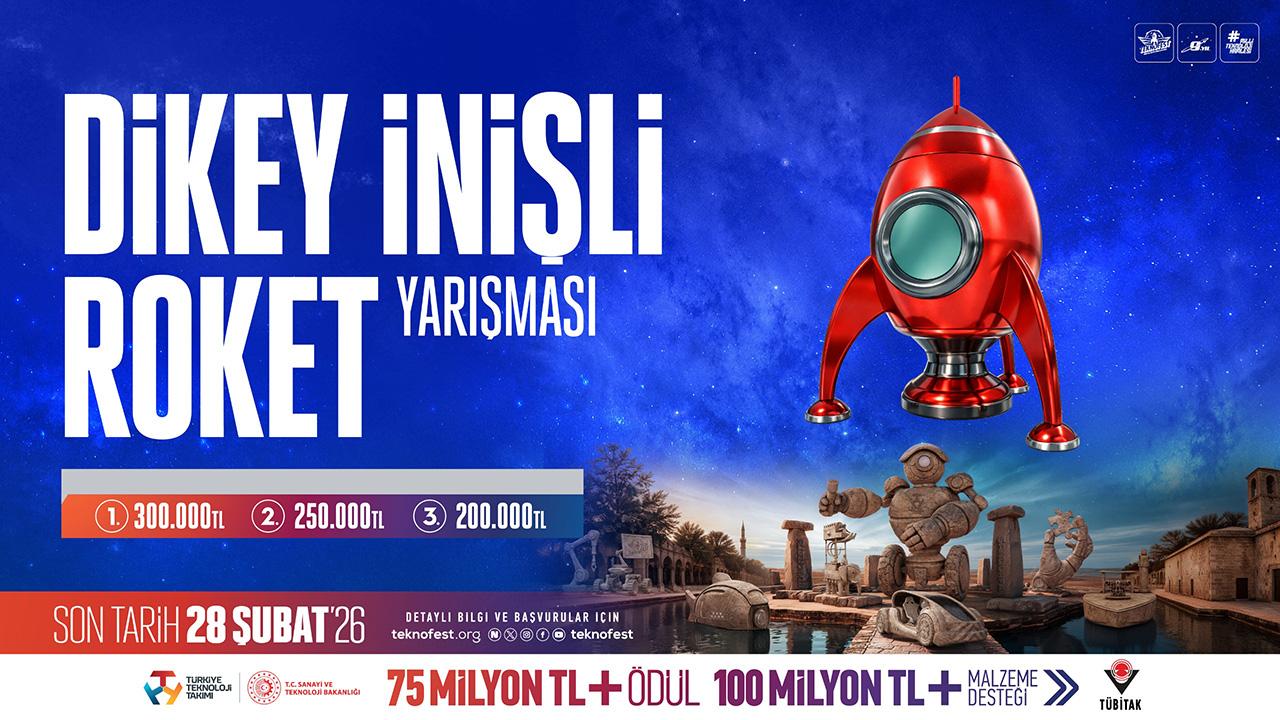
The competition, which was held for the first time in 2022 under the leadership of TÜBİTAK, is the first rocket competition in the world to be held using the cold gas thrust vertical landing concept.
The competition's focus is on rocket-powered landing systems, a critical area of rocket technology. It offers participants a holistic engineering experience that goes beyond theoretical knowledge and includes design, integration and testing processes. The competition, which encourages teams from different disciplines to work together, aims to develop young people's skills in problem-solving and producing advanced technologies in a team spirit.
In the 2026 competitive mission the teams are; An advanced technical approach is expected that includes autonomous control algorithms, harmonious integration of avionics and propulsion systems, and precise landing management. The aim is for the rockets fired from the specified height to land in a controlled and gentle manner using cold gas propulsion. Decisions and system reactions, especially at the time of landing, are among the main factors that determine the technical difficulty of the competition. Teams that successfully complete a soft landing also have the opportunity to earn additional points by demonstrating their system performance at a higher level with optional bonus shot scenarios.
The competition is open to associate, bachelor's and master's students who are studying or completing their degree at home or abroad. All young people who are interested in rocket and space technologies and want to demonstrate their theoretical knowledge in this field are welcome to take part in this prestigious competition. Important prizes await the winning teams in the Vertical Landing Rocket Competition. The first prize was set at 300,000 TL, the second prize at 250,000 TL and the third prize at 200,000 TL.
Applications are open until February 28 for the TEKNOFEST Vertical Landing Rocket Competition, which offers a great opportunity for young people who want to design the space and rocket technologies of the future and develop their technical skills in a real-world mission scenario.
Bir yanıt yazın