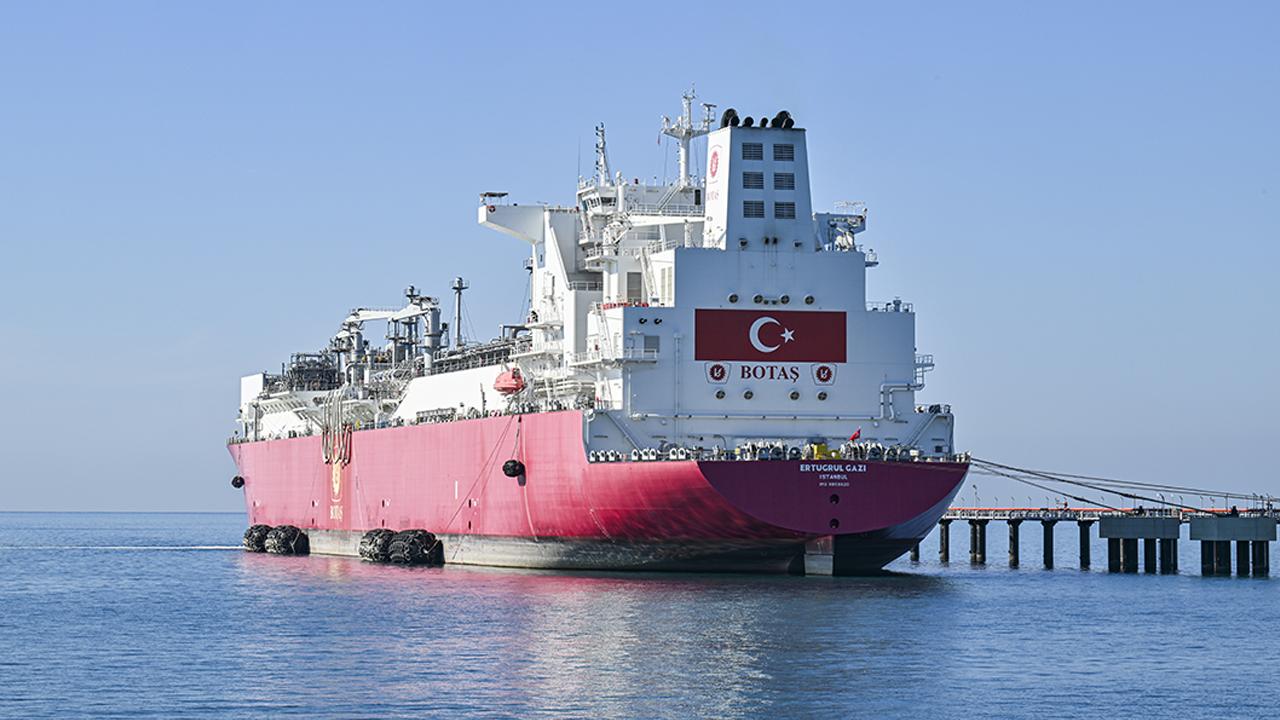
According to the ministry's statement, Bayraktar explained that Türkiye's LNG infrastructure is at a level that can meet all household gas needs even in the harshest winter days when consumption is at its peak.
Bayraktar explained that energy security has been strengthened through the diversification of countries of origin and supply routes as well as domestic production.
Explaining that Türkiye has a total of five LNG facilities, two of which are land terminals and three are floating storage and regasification units (FSRU), Bayraktar said: “Our LNG gasification capacity, which was 34 million cubic meters per day in 2016 when we implemented the National Energy and Mining Policy, has increased about five times to 161 million cubic meters today.” he said.
Recalling that the daily demand for natural gas increased to an average of 330 million cubic meters on the days when consumption was highest, Bayraktar said: “To date, Turkey has been able to purchase almost half of the natural gas it needs as LNG by ship. Our LNG capacity is enough to cover the entire amount of natural gas our citizens need in their homes, even in the coldest days of winter when consumption is at its peak.” gave his assessment.
Bayraktar emphasized that in addition to increasing the gasification capacity, the number of entry points in the national natural gas network was also increased to 14, pointing out that Türkiye's total daily gas injection capacity has reached 495 million cubic meters.
LNG offers easy supply
Liquefaction of natural gas is carried out to reduce the volume of gas and make it easily transportable in international trade. The liquefaction process involves cooling natural gas and converting it into a liquid, shrinking the volume of the gas by about 600 times.
Turkey, which can regasify liquid natural gas in its LNG plants and FSRU units, has the ability to source LNG from around the world and gains a cost advantage thanks to this capability.
Bir yanıt yazın