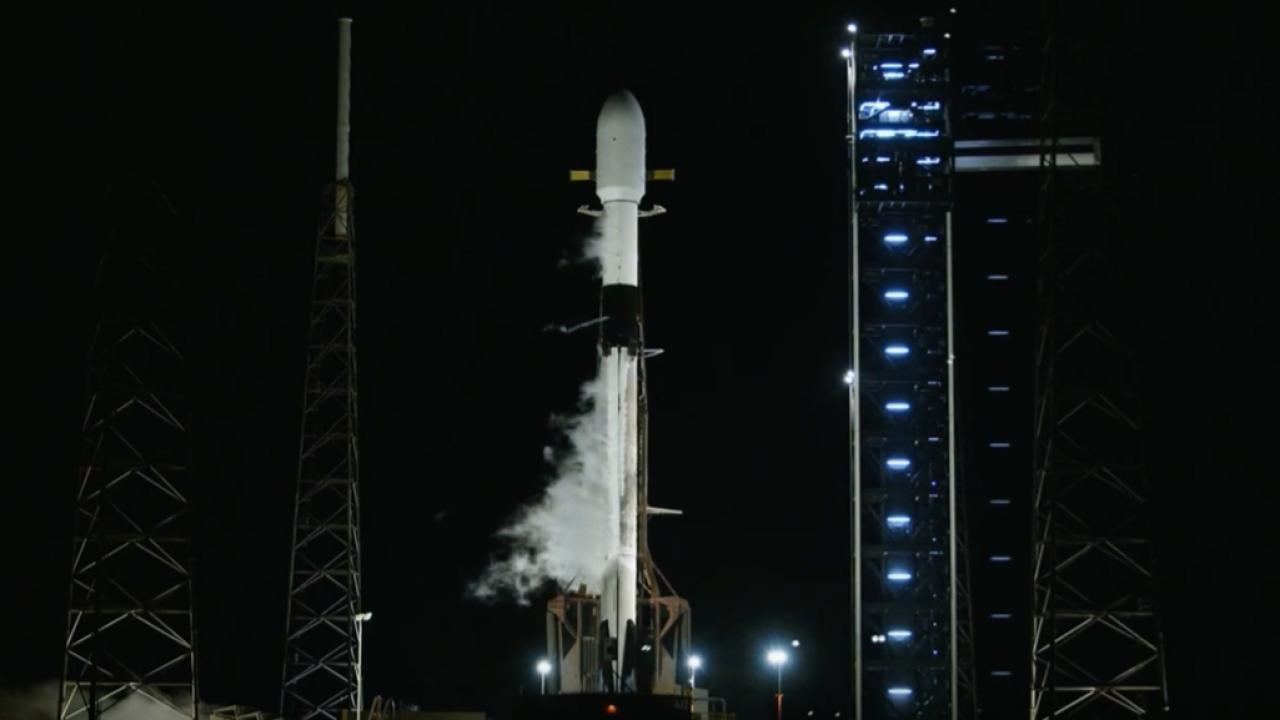
According to Baykar's statement, Fergani Space Technologies, founded by Baykar chairman and technology leader Selçuk Bayraktar, launched the FGN-100-d2 satellite, developed with its national engineering expertise, from the US SLC-40 Cape Canaveral base at 8:09 a.m. Turkish time yesterday. This successfully completed the second step of Fergani Space's Positioning Constellation Satellite Project.
FGN-100-d2, Türkiye's largest private satellite weighing 104 kilograms, was launched into space as part of SpaceX's Bandwagon-4 mission. About 74 minutes after launch, it separated from the launch vehicle at 09:23 Turkish time and landed successfully in the target orbit. He then officially began his service by transmitting the first telemetry data.
The launch process was monitored moment by moment by Fergani Space Chief Executive Officer (CEO) Selçuk Bayraktar and his team from the Space Observation and Control Center at the Özdemir Bayraktar National Technology Center.
Fergani Space successfully completed the first step of the project in question on January 14, 2025. The first satellite, FGN-100-d1, weighing 102 kilograms, was launched from the US Vandenberg Space Force Base as part of the Transporter-12 mission. Approximately 62 minutes after launch, the satellite successfully reached orbit and began transmitting telemetry data.
“The goal is to put the Ulugh Beg Global Positioning System into operation independently”
Selçuk Bayraktar, whose views were included in the statement, stated that the second satellite of the Fergani Space Initiative, FGN-100-d2, has successfully reached space and that this satellite is a test satellite of the 100-kilogram class of the Ulugh Beg Global Positioning System that they will build.
Bayraktar explained that Fergani Space, which began operations in 2022, continues its journey with 135 teammates, noting that the technology, systems and designs of the satellites were entirely developed by the Fergani team with its own resources and that they expect a mission duration of about 5 to 7 years.
Bayraktar said: “Our goal is to access more than 100 satellites within five years and independently operationalize our Ulugh Beg Global Positioning System and offer it to Turkey and all our friendly and friendly regions.” he said.
“We are also developing our orbital transfer vehicle”
Stating that Fergani Space will continue its work with the orbital transfer vehicle, Selçuk Bayraktar said:
“In addition to these studies, we are also developing our orbital transfer vehicle. It will be launched in the coming days along with a small test satellite. Our teammates are continuing the design of our launch vehicle to achieve the ability to fly into space independently. Good luck to our homeland and our nation.”
FGN-100-d2, developed by Fergani space engineers with national resources, will operate in low-Earth orbit at an altitude of about 510 kilometers. The satellite will orbit the world about 15 times a day at a speed of 7.6 km/h.
The national satellite was fully developed by the Fergani engineering team, including its domestic avionics equipment, national software integration, engine with green propulsion technology, structural design and environmental testing.
FGN-100-D2 will test on-orbit operations, telemetry-telecommand communications, positioning and payload communications capabilities.
Bir yanıt yazın