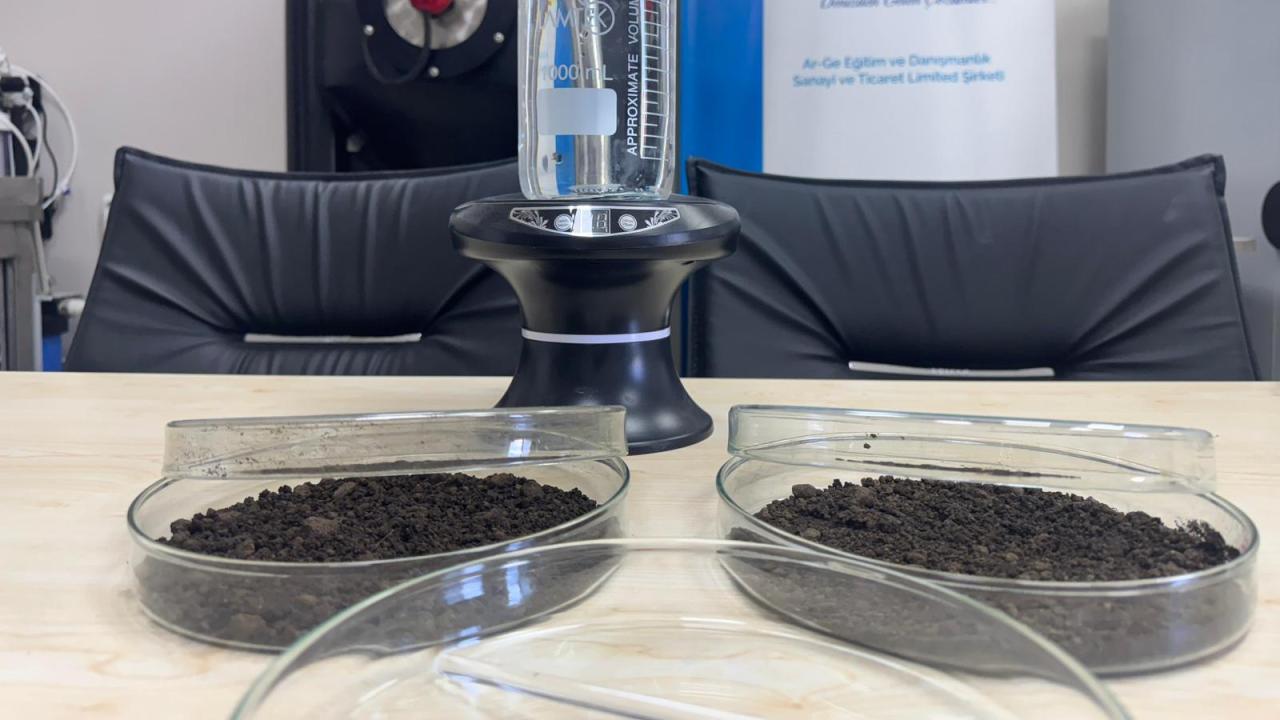
IU Faculty of Water Sciences Professor for Marine Biology Department. Dr. Gülşen Altuğ and his team began to work with sea bacteria contaminated by oil.
Within this area, bacteria from the oceans in Türkiye were collected with the research ship of the Faculty of Water Sciences from the Faculty of Water Sciences.
As a result of long research, those who consume oil as food were selected between these bacteria.
As a result of the study, oil contaminated floors were cleaned with marine bacteria.
The study was also successfully implemented as part of the United Nations project (UN projects) to eliminate the oil pollution of the high saline.
“It has an environmentally friendly and capable technology to compete with the world”
Prof. Dr. Gülşen Altuğ said that they have created basic data on the industrial use of seabacteria for many years.
Petro -resistant bacteria, oil as food to consume the ability to demonstrate their ability to prove Altuğ, said they scanned thousands of bacteria.
Altuğ explained that the potential to select the most productive in oil removal and to eliminate oil pollution both alone and together.
Altuğ emphasizes that the physical, chemical and mechanical methods used in the world to remove oil pollution are the worldwide ecological concerns, Altuğ said that the biological improvement is the methods of the future and that it becomes mandatory in international projects.
Altuğ, who underlines healing with biological methods that do not imitate nature and do not damage the environment, is not a necessity: “If we want to clean nature in one area in which tons of oil are distributed into the environment, such solutions are indispensable.” he said.
In this context, the patented method, which was developed in the technology transfer office of the Istanbul University, was transformed into a domestic product, said Altuğ: said.
Floor cleaning on an area of 3.5 million cubic meters is planned
Prof. Dr. Altuğ, the use of the developed bacteria against oil pollution, is not only limited to the sea, but also to the sea, the Gulf War during the war war triggered with sea water and high salinas to clean the United Nations project carried out in Kuwait, he said.
Altuğ said that soil cleaning in an area of 3.5 million cubic meters with the seabacteria they developed and that the preliminary attempts of this study were carried out in laboratories within Istanbul Teknocent and prescribed in the open area.
Prof. Dr. Altuğ emphasizes that “biological recipe” is specially developed for every dirty area “, since every soil structure and oil pollution are unique, we have created recipes that contain details such as an adequate combination of bacteria, quantity and duration that should be used.” he said.
Altuğ was expressly that seabacteria are very tolerant compared to environmental variables and said that bacteria that are adapted to the dynamic conditions of the sea are more resistant to pH changes, salinity and temperature fluctuations.
“The same type of bacteria shows different characteristics in different geographies”
Altuğ, who refers to the success rates in field trials: “At the end of the 17th day we found the oil removal of up to 90 percent when the corresponding conditions are met. Of course, this rate can be higher in the laboratory environment, but the main thing is to show this success in the field.” He said.
Altuğ explained that all metabolic properties of bacteria that are isolated from different habitats from the seas from Türkiye were scrolled and sent to places in which they are used in liquid form according to the detection of their success.
Prof. Dr. Altuğ, bacteria, oil pollution in the unique and regional characteristics of the world due to the distinction between similarities in the world: “The same type of bacteria shows different features in different geographies. Bacteria We have developed these geographical forms.
Bir yanıt yazın